Your car’s paint does more than make it look good; it’s the first line of defence against the elements, road debris, UV rays, and the daily wear and tear of life on the road. But here’s the thing, most car owners don’t realise: by the time paint damage becomes visible, it’s already too late for prevention. You’re now in repair territory, and that’s always more expensive.
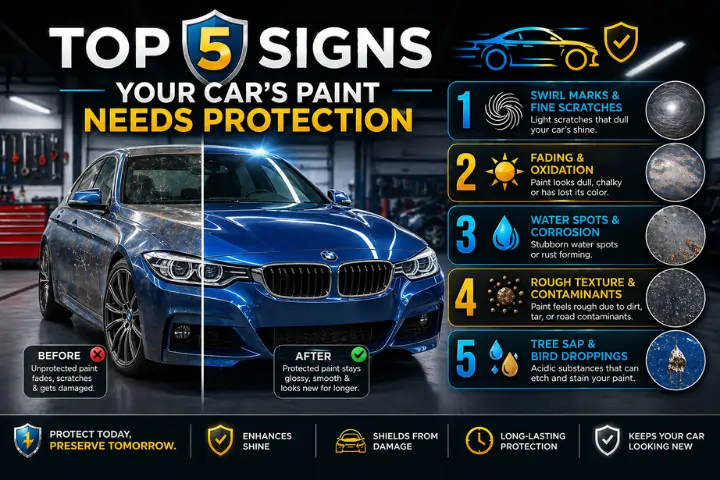
Most Drivers Ignore These Warning Signs Until It’s Too Late
The smart move? Recognising the early warning signs and acting before things get worse. One of the most effective solutions available today is Paint Protection Film, a virtually invisible, self-healing urethane layer that shields your car’s finish from damage. But how do you know if your car actually needs it right now?
Here are the top 5 signs to watch for:
1. You’re Noticing Swirl Marks and Fine Scratches
Take a good look at your car’s paint under direct sunlight or a bright light. Do you see a web of fine, circular scratches, especially on the hood, roof, or trunk? These are swirl marks, and they’re more common than most drivers realise.
Swirl marks typically come from:
(1) Improper washing techniques (like circular wiping motions)
(2) Automatic car washes with abrasive brushes
(3) Dry wiping dust or dirt off the surface
(4) Low-quality microfibre cloths
While these scratches might seem minor, they dull the paint’s clarity and gloss over time. Once you start noticing them, it’s a clear signal that your paint’s surface is vulnerable. Paint Protection Film creates a sacrificial barrier that absorbs this kind of micro-abrasion before it ever reaches your car’s actual clear coat.
2. Rock Chips Are Appearing on the Front End
If you regularly drive on highways, gravel roads, or follow trucks and heavy vehicles, rock chips are almost inevitable unless you’re protected. These small but sharp impacts from stones and road debris hit your car at high speed, chipping away at the paint and exposing bare metal or primer beneath.
Watch out for these common chip-prone zones:
(1) Front bumper — takes the most direct impact
(2) Hood leading edge — especially vulnerable at highway speeds
(3) Side mirrors — hit by debris kicked up by other vehicles
(4) Rocker panels — low to the ground and exposed to constant road spray
Even a handful of rock chips can lead to rust if left untreated, particularly in humid or coastal environments. PPF Coating is specifically engineered to absorb these high-impact hits. Its thick, flexible urethane construction prevents chips from ever penetrating to the paint surface. If you’re already seeing the first few chips appear, now is the time to act before it spreads further.
3. Your Car’s Paint Looks Faded or Dull
Has your car lost that showroom shine? If the colour looks washed out, chalky, or uneven — especially on horizontal surfaces like the hood, roof, and trunk UV oxidation is likely the culprit.
Sun damage is one of the most underestimated threats to automotive paint. Over time, ultraviolet radiation breaks down the clear coat, causing:
(1) Colour fading and dullness
(2) Chalky or powdery texture on the surface
(3) Uneven paint tone that worsens in patches
(4) Peeling the clear coat in the advanced stages
Regular waxing helps, but it wears off quickly and offers limited protection. Paint Protection Film, on the other hand, contains UV inhibitors built directly into the film’s construction, providing long-term protection that doesn’t wash away or degrade with seasonal changes. If your car is already showing early signs of UV damage, PPF On Car can help stabilise the existing paint and prevent further deterioration.
4. You’ve Recently Bought a New or Luxury Car
This one isn’t about visible damage; it’s about preventing it before it starts. If you’ve just driven a brand-new car off the lot, or you own a premium or luxury car, your paint is at its most vulnerable right now.
New cars come with fresh factory paint that hasn’t been exposed to the elements yet. That pristine finish can be compromised surprisingly quickly by:
(1) Parking lot door dings and minor scuffs
(2) Bird droppings and tree sap (which are chemically corrosive)
(3) Construction debris and industrial fallout
(4) Every day, washing and detailing habits
For luxury car owners, especially, the cost of a professional Car Paint Protection Film installation is a fraction of what a single paint correction or panel respray would cost. Think of PPF as an insurance policy for your car’s appearance — one that pays for itself the moment it stops the first chip or scratch.
5. You’re Preparing to Sell Your Car
Planning to sell your car in the next year or two? Your car’s paint condition plays a bigger role in resale value than most owners realise. Buyers and dealerships both assess exterior condition carefully, and paint with chips, swirl marks, or fading can significantly reduce what you’re offered.
Here’s what buyers notice immediately:
(1) Paint clarity and depth (does it still have that “wet” gloss?)
(2) The presence of chips, especially on the front end
(3) Scratches visible under light
(4) Any signs of previous touch-up work or mismatched paint
Applying Paint Protection Film before listing your car preserves the paint in its current state, prevents further damage during the final months of ownership, and signals to buyers that the vehicle has been well cared for. In competitive used car markets, a well-maintained exterior can command a noticeably higher price.
Don’t Wait for the Damage to Show
The common thread across all five signs is this: the best time to apply PPF Coating for Car is before the damage accumulates, not after. PPF isn’t just for luxury car owners or automotive enthusiasts; it’s a practical, long-term investment for any vehicle owner who wants to preserve their car’s appearance, protect its value, and avoid costly repairs down the road.
If you’ve spotted even one of these signs on your vehicle, consider speaking with a certified PPF installer to assess your options. Your car’s paint is worth protecting — and the sooner you act, the better the results.
FAQ’s – Car Paint Damage Signs
Q1. What exactly is Paint Protection Film, and how does it work?
Paint Protection Film is a thin, transparent urethane layer applied over your car’s paint to shield it from scratches, rock chips, and UV damage. It acts as a sacrificial barrier, absorbing impact so your original paint stays flawless underneath.
Q2. How long does Paint Protection Film last on a vehicle?
High-quality Paint Protection Film typically lasts between 5 to 10 years, depending on the brand and maintenance. Most premium PPF products come backed with a manufacturer’s warranty for added peace of mind.
Q3. Will Paint Protection Film change the appearance of my car’s paint?
No, when professionally installed, PPF is virtually invisible and preserves your car’s original colour and gloss. It actually enhances paint clarity rather than altering its appearance.
Q4. Can Paint Protection Film be applied to any vehicle?
Yes, PPF can be applied to any make or model — from daily drivers to luxury cars. It’s available as full-body coverage or targeted protection on high-risk areas like the hood and bumper.
Q5. Is Paint Protection Film worth the cost compared to regular waxing?
Unlike wax, which wears off within weeks, Car Paint Protection Film delivers long-term, durable protection that doesn’t degrade with weather or washing. Over time, it saves you significantly more than repeated paint corrections and chip repairs.


0 Comments