Everything a Car & Bike Lover Needs to Know Before Investing in PPF
Why PPF is the Smartest Investment for Your Car/ Bike?
Suppose you’ve just driven your brand-new car off the showroom floor. The paint gleams like liquid metal under the Indian sun. Six months later — a rogue stone chip on the bonnet, a swirl mark from a careless cloth at the petrol station, and acid rain spots from a post-monsoon drive. Sound familiar? Every car and bike enthusiast in India knows this sinking feeling all too well.
This is exactly where Paint Protection Film — popularly known as PPF — steps in as your vehicle’s invisible armour. Globally, PPF has been the go-to choice for luxury car owners, motorsport enthusiasts, and smart everyday drivers for over two decades. In India, the PPF revolution is now fully underway, and there has never been a better time to understand, evaluate, and invest in it.
This guide is written for you — the passionate car or bike owner who treats their ride not just as a machine, but as a statement. Whether you own a Royal Enfield Himalayan, a Hyundai Creta, a BMW 5 Series, or a Porsche 911, PPF is one purchase you will not regret. Let’s break it all down.
What Exactly Is Paint Protection Film (PPF)?
Paint Protection Film is a thermoplastic polyurethane (TPU) film applied to the exterior painted surfaces of a car or bike to protect the original paint from damage. Originally developed by the U.S. military in the Vietnam War era to protect helicopter rotor blades from debris, PPF was later adopted by the automotive industry and has since evolved into an incredibly sophisticated product.
The Exploration of a PPF Layer
A high-quality PPF product like Ultraguard’s is built from multiple layers, each serving a distinct purpose:
| Layer | Function |
|---|---|
| Top Coat (Clear Coat) | Self-healing urethane layer — absorbs scratches and swirl marks, returns to original form with heat |
| TPU Base Film | The core structural layer — provides flexibility, strength, and impact resistance |
| Adhesive Layer | Acrylic pressure-sensitive adhesive — bonds firmly to paint without damaging it on removal |
| Release Liner (PET) | Protective backing — removed during installation to expose the adhesive |
The magic of modern PPF lies in that top self-healing clear coat. Minor scratches and swirl marks literally disappear when the film is exposed to heat — whether from sunlight or warm water. This is not a marketing gimmick; it is chemistry at work.
Why PPF Matters More in Indian Conditions
India is not just a country; it is a carnival of road conditions, weather extremes, and environmental hazards that are uniquely brutal on vehicle paint. Here is what your car’s paint fights every single day:
What Damages the Car Paint?
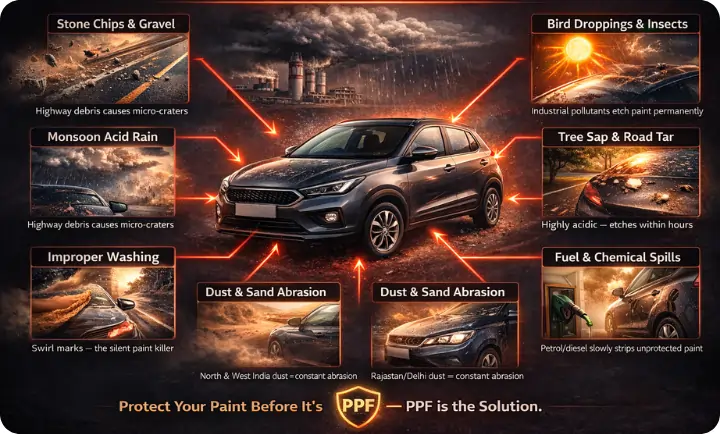
(a.) Stone chips and gravel: Our highways and construction zones are notorious for loose debris flying at 80–100 km/h speeds, creating micro-craters in your bonnet and front bumper.
(b.) Monsoon acid rain: Industrial pollutants dissolved in rainwater chemically etch paint surfaces, leaving permanent water spots and stains.
(c.) UV radiation: India receives some of the most intense UV radiation in Asia, accelerating paint oxidation and colour fade — especially on dark-coloured vehicles.
(d.) Bird droppings and insect bug: These are highly acidic and can permanently etch clear coat within hours in summer temperatures.
(e.) Tree sap and road tar: Common in forested roads and freshly laid highways, these stick to paint and stain it if not removed quickly.
(f.) Fuel and chemical spills: Petrol and diesel drips at fuel stations slowly degrade unprotected paint over time.
(g.) Dust and sand abrasion: Particularly in North and West India, airborne particulates create constant micro-abrasion on surfaces.
(h.) Improper washing: The dreaded dry cloth wipe or automated car wash brushes that leave swirl marks — a silent paint killer across India.
Without protection, an average Indian car’s paint starts visibly degrading within 3–5 years. With a quality PPF applied, you are essentially giving your paint a warranty against the Indian environment.
Types of PPF Available in India that are Legal
Not all PPF is the same. The Indian market now offers an exciting range of film types catering to different aesthetic preferences and protection needs. Here is your complete guide:
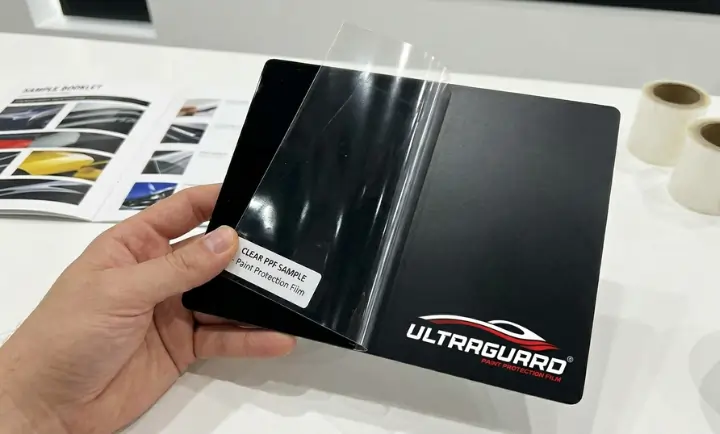
Clear PPF (The Invisible Shield)
The most popular choice for purists who want protection without changing their vehicle’s appearance. Clear PPF is virtually invisible once installed and lets your original paint colour and gloss shine through in its full glory. It is the perfect choice for premium factory colours — think Pearl White, Obsidian Black, or Abyss Blue on luxury cars.
(a.) Best for: Preserving original paint colour and finish
(b.) Finish: High gloss — enhances depth and clarity
(c.) Thickness: Typically 6–8 mil (150–200 microns)
(d.) Self-healing: Yes — minor scratches disappear with heat
(e.) Ideal vehicles: Daily drivers, luxury cars, collector vehicles
Matte PPF (The Stealth Armour)
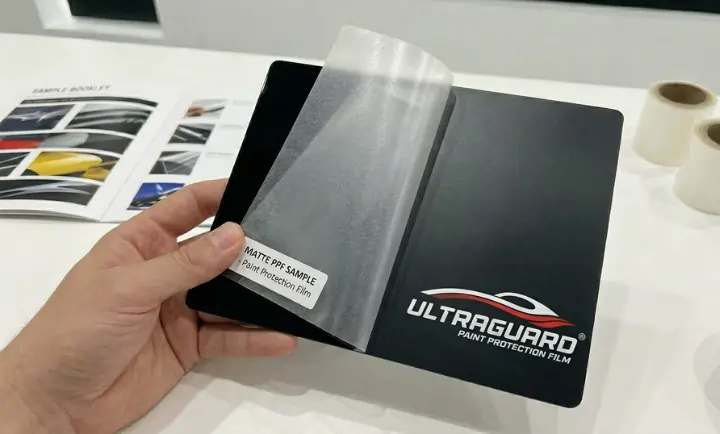
For those who want to transform a glossy car into a jaw-dropping matte finish — or preserve an existing factory matte paint — Matte PPF is the answer. It gives vehicles that sleek, aggressive, military-spec look that has taken the automotive world by storm. On a white or silver car, matte PPF is a complete transformation.
(a.) Best for: Custom matte look or protecting factory matte paint
(b.) Finish: Flat satin matte — zero reflection, maximum drama
(c.) Thickness: 6–8 mil
(d.) Self-healing: Yes
(e.) Ideal vehicles: Sports cars, SUVs, performance bikes
Colour PPF (Style Meets Protection)
Why stop at clear or matte when you can change your car’s entire colour while simultaneously protecting it? Colour PPF allows you to wrap your vehicle in virtually any shade imaginable — from satin Nardo Grey to deep ocean blue, racing yellow to military green. It offers all the protective properties of clear PPF with the added bonus of a complete colour change, without a respray.
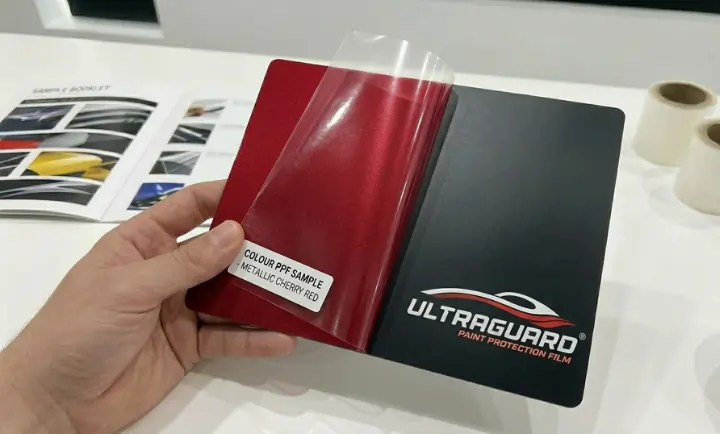
This is where car personalisation in India is heading — and Ultraguard leads this space with one of the most comprehensive colour PPF catalogues available.
Black PPF (The Dark Knight Series)
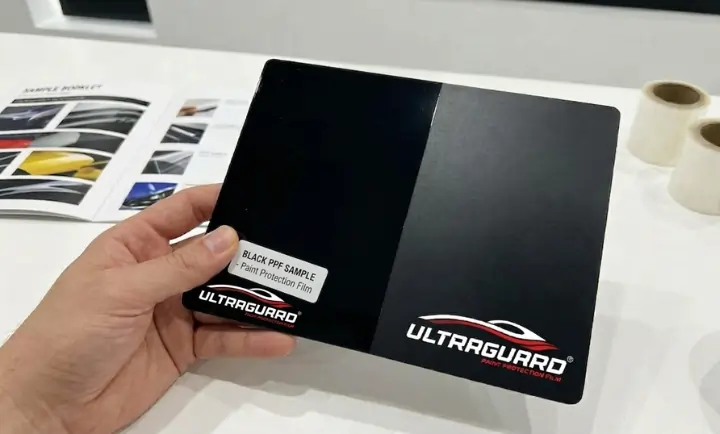
A specialised category for those who love blacked-out aesthetics. Black PPF transforms accents, trim, roofs, pillars, and mirror caps into deep gloss or satin black, creating a stunning contrast with body colour. Many premium car owners use Black PPF specifically on chrome trims and roof panels for that bespoke, murdered-out look.
Texture PPF (Carbon Fibre, Brushed Metal & More)
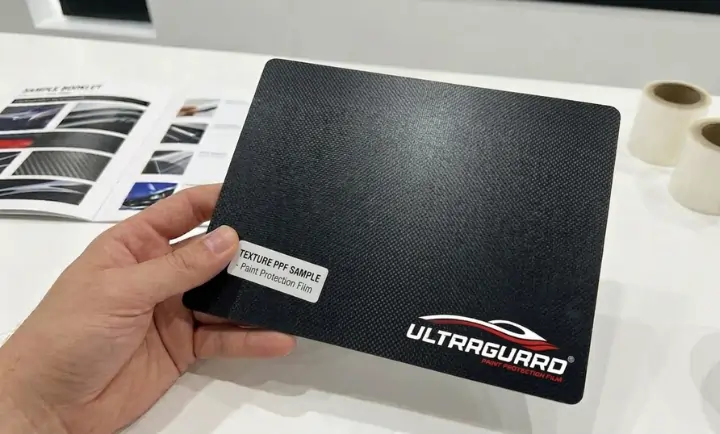
The most exotic category of all — Texture PPF replicates premium material finishes like carbon fibre weave, brushed aluminium, wood grain, and more without any actual material change. It is the most cost-effective way to get carbon fibre aesthetics on interior and exterior trim pieces.
Chrome PPF Series
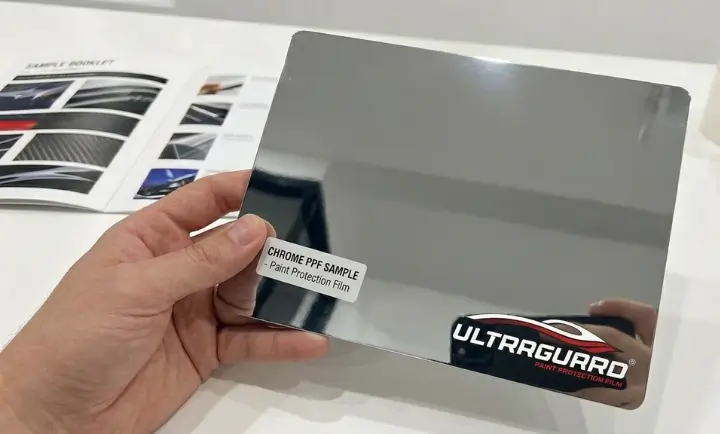
For those who want to take their vehicle’s presence to show-car territory, Chrome PPF delivers mirror-like metallic finishes in silver, gold, and coloured chrome variants. This is attention-commanding stuff — not for the faint-hearted, and absolutely perfect for bike tanks, hoods, and roof panels that deserve to stand out.
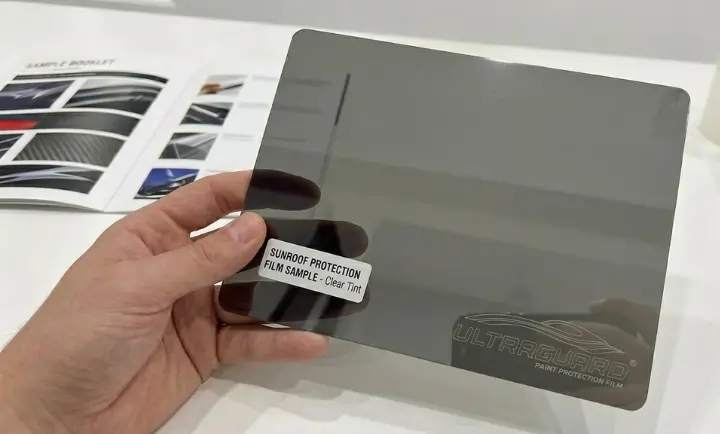
Sunroof Protection Film
A specialised film for glass sunroofs and panoramic roofs — protecting against UV penetration, stone chips, and surface scratching. This is an often-overlooked but extremely practical investment, especially for cars that park outdoors.
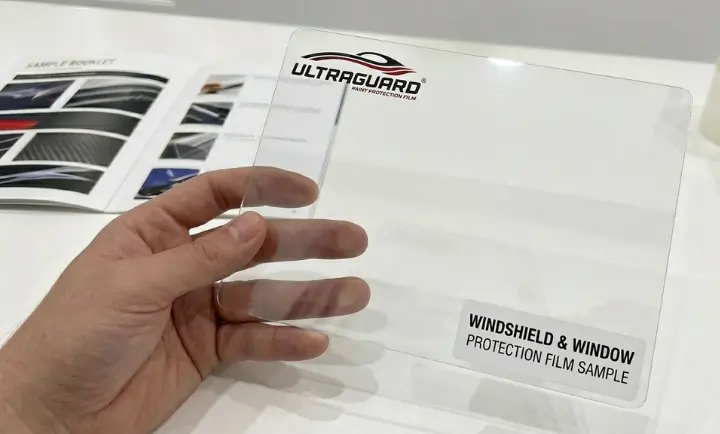
Windshield & Window Protection Film
Extending PPF logic to glass surfaces, windshield protection film guards against rock chip pitting, which can eventually lead to cracks. Window films on side glasses provide UV protection, heat rejection, and privacy — critical for Indian summer driving.
PPF for Bikes – The Revolution Two-Wheeler Owners Needed
For far too long, PPF was seen as an exclusive territory of four-wheelers. That era is firmly over. Bike enthusiasts across India — from Royal Enfield Classic 350 owners to KTM Duke 390 riders to Kawasaki Ninja ZX-10R superbikers — are now turning to PPF to protect their precious machines.
Why Bikes Need PPF Even More Than Cars
(a.) Greater exposure: Motorcycles have no body panels between the road and the paint — every stone, every raindrop, every insect hits the paint directly.
(b.) Higher resale dependency: Bike resale values are very condition-sensitive. Pristine paint is worth real money at the time of selling.
(c.) Fuel tank vulnerability: The fuel tank on a bike is the most visible and most frequently touched surface — and therefore the most prone to scratching from keys, buckles, and rings.
(d.) Chain lube and oil splatter: The rear wheel area is constantly exposed to chain lubricant spray, which stains paint.
(e.) Track use and adventure riding: Riders who push their bikes on tracks or take them on muddy trails need the extra layer of protection PPF provides.
Common Bike PPF Applications
| Area | Why It Needs PPF |
|---|---|
| Fuel tank | Most touched surface; vulnerable to key scratches, knuckle abrasion, and fuel spills |
| Front fairing / mudguard | First line of defense against stone chips and insect strikes at speed |
| Swingarm and frame | Chain lube splatter, mud, and abrasion from off-road riding |
| Exhaust heat shields | Heat discolouration and environmental staining |
| Side panels | Everyday scuffs and knee contact marks |
| Rear mudguard | Tyre spray, mud, and roost from unpaved surfaces |
How to Choose the Right PPF?
Choosing the right PPF comes down to five key questions. Answer these honestly, and your decision becomes straightforward:
Q1: What is your primary goal — protection or transformation?
(a.) If protection without appearance change is the goal → Clear PPF is your answer.
(b.) If you want to change the look while protecting → Matte, Colour, or Black PPF opens up extraordinary possibilities.
Q2: Which areas of the vehicle need protection most?
| Coverage Type | Areas Covered |
|---|---|
| Partial / Impact Zone | Front bumper, bonnet leading edge, door edge guards, mirror caps — high-impact areas only |
| Full Front End | Complete bonnet, front bumper, headlights, fenders, mirrors — recommended for highway vehicles |
| Full Body | 100% exterior coverage — the gold standard for new or premium vehicles |
| Custom / Specific | Targeted areas like the roof, door handles, rockers, or just the fuel tank on bikes |
Q3: What is your budget?
PPF pricing in India varies based on film type, coverage area, and installation quality. Here we mentioned the average price:
| Coverage | Hatchback / Sedan | SUV / MUV | Luxury / Premium | Bike |
|---|---|---|---|---|
| Partial (Front) | ₹8,000–₹15,000 | ₹12,000–₹20,000 | ₹20,000–₹40,000 | ₹3,000–₹8,000 |
| Full Front End | ₹18,000–₹30,000 | ₹25,000–₹45,000 | ₹40,000–₹80,000 | ₹8,000–₹15,000 |
| Full Body (Clear) | ₹35,000–₹65,000 | ₹55,000–₹1,00,000 | ₹1,00,000–₹3,00,000+ | ₹15,000–₹30,000 |
| Full Body (Colour/Matte) | ₹45,000–₹80,000 | ₹70,000–₹1,30,000 | ₹1,30,000–₹4,00,000+ | ₹20,000–₹40,000 |
Note: Prices are indicative ranges for quality PPF installation with certified installers. Extremely cheap quotes typically mean inferior film grades or poor installation — both of which cost more in the long run.
Q4: How long do you plan to keep the vehicle?
If you are keeping the vehicle for 3+ years, full body PPF pays for itself many times over through paint preservation and resale value uplift. If it is a short-term ownership, targeted protection of high-impact zones is the smart play.
Q5: What is the vehicle’s paint condition?
This is critical and often overlooked. PPF should ideally be applied on paint that is in good condition, or paint corrected to remove existing defects before installation. PPF will preserve the paint exactly as it is. It will not hide deep scratches or oxidation already present.
PPF vs Ceramic Coating vs Vinyl Wrap — What’s the Difference?
This is one of the most common questions in the Indian automotive community, and rightly so. Here is the definitive comparison:
| Factor | PPF | Ceramic Coating | Vinyl Wrap |
|---|---|---|---|
| Primary Purpose | Physical paint protection | Chemical protection & shine | Colour/aesthetic change |
| Protection Level | Excellent — stops stone chips, scratches | Good — chemical & UV only | Moderate — light scratches only |
| Self-Healing | Yes (premium grades) | No | No |
| Thickness | 150–250 microns | 1–10 microns | 60–100 microns |
| Durability | 5–12 years (quality brands) | 2–5 years | 3–7 years |
| Reversibility | Yes — removable without damage | No (wears off) | Yes — removable |
| Paint Preservation | Maximum | Good | Moderate |
| Can Be Combined? | Yes — coat PPF with ceramic for ultimate protection | Standalone or on top of PPF | Standalone (not combined with PPF) |
| Cost | Higher upfront, best long-term value | Medium | Medium to high for full body |
The expert’s recommendation:The expert’s recommendation: For maximum protection and longevity, apply a ceramic coating on top of PPF. You get the physical impact barrier of PPF plus the hydrophobic, chemical-resistant, and gloss-enhancing properties of ceramic in one lethal combination.
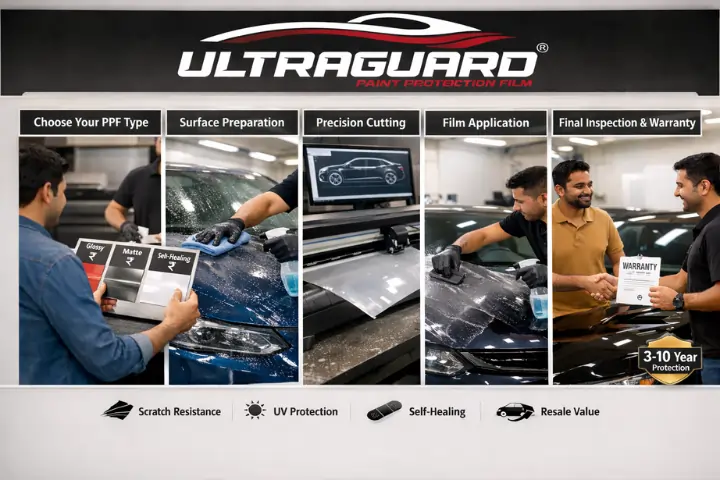
The PPF Installation Process — What to Expect
Understanding the installation process helps you evaluate the quality of your installer and know what to look for once the job is done.
Step-by-Step Installation Process
Step 1: Paint inspection and decontamination: The vehicle surface is washed, clay-barred, and decontaminated. Any paint defects that need correction are addressed before film application.
Step 2: Paint correction (if required): Machine polishing to remove swirl marks, light scratches, and water spots. This ensures PPF goes on flawless paint.
Step 3: Pattern cutting using software: Professional installers use DAP or other pattern-cutting software to generate precise computer-cut templates for every panel of your specific vehicle model — no knives on paint.
Step 4: Film application: The cut film pieces are applied using a slip solution, carefully aligned, and squeegeed into place to remove air and moisture.
Step 5: Edge wrapping: Edges are wrapped around panel edges (not cut on the paint line) for a seamless, invisible installation with no exposed edges.
Step 6: Heat forming: A heat gun is used to stretch and conform the film around curves and complex shapes, ensuring full contact and adhesion.
Step 7: Final inspection: The completed installation is inspected under bright lighting for any lifting edges, bubbles, contamination, or alignment issues.
Step 8: Curing period: The vehicle is left to cure for 24–72 hours. During this period, water entry and hard washing should be avoided.
Red Flags to Watch For in Installation
(1). Knife lines: Visible cut marks on the paint where a knife was used directly on the vehicle — this damages the clear coat.
(2). Visible edges: Film edges should be wrapped around panels, not cut visibly on the surface.
(3). Lifting corners: Any lifting within the first week indicates poor adhesion from contaminated paint or inferior film.
(4). Excessive orange peel texture: While some texture matching to OEM paint is expected, excessive texture difference indicates poor film quality.
(5). Bubbles: Small bubbles are normal in the first 24 hours and disappear as the film cures. Large or persistent bubbles indicate trapped moisture or contamination.
How to Maintain Your PPF?
PPF requires care — but thankfully, not complicated care. Follow these guidelines to maximise the life and performance of your film:
Daily and Weekly Care
(1.) Wash with a pH-neutral car shampoo and microfibre wash mitts.
(2.) Rinse from top to bottom — never bottom-up, which drags dirt upward across painted surfaces.
(3.) Avoid high-pressure washing directly at film edges, especially in the first month.
(4.) Do not wipe dust with a dry cloth — always use a damp microfibre or quick detailer spray.
Monthly Care
(1.) Apply a PPF-compatible spray sealant or quick detailer to maintain hydrophobic properties.
(2.) Inspect edges and corners for any lifting, particularly after long highway drives.
(3.) Remove bird droppings, insect splatter, and tree sap immediately — these are the most damaging organic acids that can penetrate even PPF if left too long.
Yearly Care
(1.) Professional detail: Annual machine polish (light, PPF-safe) and professional cleaning to remove deep contamination.
(2.) Topcoat refresh: Some installers offer a topcoat refresh service to restore hydrophobic properties to ageing PPF.
What NOT to Do with PPF
(1.) Never use abrasive compounds or cutting polishes — they damage the self-healing clear coat.
(2.) Avoid waxes containing carnauba with solvent carriers — use PPF-specific waxes and sealants.
(3.) Do not use automated car washes with spinning brushes — the brushes scratch PPF surfaces and can lift edges.
(4.) Never fold or crease a lifting film edge back yourself — consult your installer for proper repair.
PPF Durability & Warranty 2026
PPF longevity depends on three factors: film quality, installation quality, and maintenance. Here is what you can realistically expect:
| Factor | Entry-Level PPF | Mid-Range PPF | Premium PPF (Ultraguard Grade) |
|---|---|---|---|
| Film Life | 2–3 years | 4–6 years | 7–10 years |
| Self-Healing | Limited | Good | Excellent |
| Yellowing Resistance | Low | Medium | High |
| Clarity | Moderate | Good | Crystal clear |
| Warranty | 1 year (if any) | 3–5 years | 5–10 years manufacturer |
| Edge Lifting Resistance | Poor | Average | Superior |
| Indian Climate Suitability | Marginal | Adequate | Optimised |
NOTE: A credible PPF warranty should cover film yellowing, cracking, peeling, bubbling, and edge lifting under normal conditions. Ensure you receive a written warranty document that specifies coverage terms.
10 Expert Tips Before You Buy PPF in India
(1.) Always see the installer’s previous work in person — look at cars that have had PPF for 1+ years, not freshly installed cars.
(2.) Ask specifically which brand and grade of film is being used — premium film brands have verifiable specifications and warranty cards.
(3.) Insist on computer-cut templates, never bulk-cut film applied with a blade on the paint.
(4.) Clarify what paint preparation is included — good installations include a clay bar treatment and at least a light paint correction.
(5.) Get the warranty card at the time of delivery — verify it is from the film manufacturer, not just the installer.
(6.) Avoid the temptation of extremely low prices — a ₹5,000 full-body PPF quote is either a very thin economy film or outright fraud. Quality has a price.
(7.) For bikes, ensure the installer has specific experience with motorcycle PPF — curves on fuel tanks and fairings require a different skill set from flat car panels.
(8.) Consider the full body approach for new vehicles — partial protection often creates an uneven look as unprotected areas age faster.
(9.) If you are getting Colour or Matte PPF, ask for a sample swatch to verify the colour in outdoor natural light before committing.
(10.) Build a relationship with a certified installer — PPF care queries, edge repairs, and future upgrades are much easier when you have an ongoing relationship with a trusted professional.
Some PPF Myths
Myth 1: ‘PPF is only for luxury cars’
Reality: PPF makes financial sense for any vehicle, not just luxury ones. The cost of a full respray on any car — from a Maruti Swift to a Mahindra Thar — far exceeds the cost of PPF. The protection-to-cost ratio is excellent across all vehicle segments.
Myth 2: ‘PPF will turn yellow in Indian heat’
Reality: Low-quality, early-generation PPF did yellow. Premium modern PPF films, especially those from established brands, use UV-stabilised TPU that maintains clarity for years even in harsh Indian sunlight. Always verify the yellowing warranty with your chosen brand.
Myth 3: ‘PPF will damage my original paint when removed’
Reality: Quality PPF uses acrylic pressure-sensitive adhesive specifically engineered to bond without chemical reaction with paint. When properly installed on healthy paint and removed by a professional, it leaves zero residue and zero damage. The critical caveat: paint with pre-existing defects like chips, cracks, or peeling may not survive film removal regardless of film brand.
Myth 4: ‘Ceramic coating provides the same protection as PPF’
Reality: Ceramic coating and PPF serve fundamentally different purposes. Ceramic coating is a chemical shield — excellent against chemicals, UV, and mild environmental contaminants. PPF is a physical shield — stopping stone chips, scratches, and abrasion that ceramic simply cannot. Think of ceramic as sunscreen and PPF as a bulletproof vest.
Myth 5: ‘PPF makes maintenance harder’
Reality: The opposite is true. PPF’s hydrophobic surface actually makes the car easier to clean — water beads off, bird droppings rinse away more easily, and swirl marks from washing are significantly less likely to form on the self-healing surface.
WHY CHOOSE ULTRAGUARD’S PPF?
(a) India’s Pioneer & Market Leader in PPF Solutions
(b) Complete Product Range: Clear, Matte, Colour, Black, Texture, Chrome, Sunroof, Windshield & Window Films
(c) PPF for Both Cars & Bikes — One Brand, Complete Coverage
(d) Self-Healing, UV-Resistant, Anti-Yellowing Technology
(e) Nationwide Dealer & Installer Network Across India
(f) Manufacturer-Backed Warranty — Up to 10 Years on Premium Films
(g) Professional Installation by Certified Technicians
(h) E-Warranty System — Verify and Track Your Warranty Digitally
(i) Trusted by Thousands of Car & Bike Enthusiasts Across India
Ultraguard’s Complete PPF Product Portfolio
| Product Series | Ideal For |
|---|---|
| Clear PPF Series | Invisible protection — preserves original paint colour and gloss for cars & bikes |
| Matte PPF Series | Satin matte transformation — protection meets stealth aesthetics for cars & bikes |
| Colour PPF Series | Full vehicle colour change with complete protection — hundreds of colour options |
| Black PPF Series | Blacked-out accents, roofs, and trim — the ultimate murdered-out look |
| Texture PPF Series | Carbon fibre, brushed metal, and specialty textures for interior & exterior |
| Chrome Series | Mirror-finish metallic PPF for statement panels and custom applications |
| Sunroof PPF | Dedicated UV and chip protection for glass sunroofs and panoramic roofs |
| Windshield Protection Film | Guard against rock chip pitting and windshield cracks on the road |
| Window Film | UV rejection, heat control, and privacy for all side windows |
| PPF Accessories | Maintenance products, edge sealers, and detailing solutions for PPF care |
| Printable PPF | Printable PPF is a paint protection film that allows custom designs to be printed |
Note: Get to know more about the Ultraguard’s Product Series
Protect Your Vehicle — Three Easy Steps with Ultraguard
Step 1: Choose Your Film
Browse Ultraguard’s complete PPF product range at ultraguardindia.com and select the film type that matches your goal — protection, transformation, or both.
Step 2: Find Your Installer
Use Ultraguard’s nationwide dealer locator to find the nearest certified Ultraguard installation centre in your city.
Step 3: Book & Protect
Schedule your appointment, get a professional installation with manufacturer’s warranty, and drive away with complete peace of mind.
NOTE: Apart from the above steps, you can directly reach out to us by contacting us
Ultraguard Franchise & Dealer Opportunities
If you are an automotive professional, detailing studio owner, or entrepreneur looking to partner with India’s leading PPF brand, Ultraguard offers a comprehensive dealer and franchise programme. With a growing network of certified centres across India, this is your opportunity to be part of the PPF revolution.
Conclusion
Your car or bike is more than a machine — it is your companion on every journey, your expression of individuality, and for many of us, one of the most significant financial investments we make. Indian roads, climate, and environment relentlessly assault vehicle paint. PPF is not a luxury; it is intelligent ownership.
The choice of PPF type, coverage area, and — most importantly — the brand and installer you trust with this job will define how your vehicle looks and holds its value over the years ahead. Invest wisely. Protect thoroughly. Drive confidently.
FAQ’S
Q1. Which is the best PPF brand in India for cars and bikes?
The best PPF brands in India include premium options offering durability, self-healing, and UV resistance. Always choose a brand with warranty support and certified installers for reliable performance. Currently, there are two leading brands for the same i.e., UltrashieldX and Ultraguard
Q2. How much does PPF cost in India for car and bike?
PPF cost in India ranges from ₹60,000 to ₹2,50,000+ for cars and ₹15,000 to ₹60,000 for bikes, depending on coverage and quality. Full-body protection costs more than partial installations.
Q3. Where can I buy genuine paint protection film in India?
You can buy genuine PPF from authorised dealers, professional detailing studios, or certified brand installers. Avoid unverified online sellers to ensure authenticity and warranty support.
Q4. How to choose the right PPF for my car or bike in India?
Choose PPF based on thickness, self-healing properties, warranty, and brand reputation. Also consider your driving conditions and whether you need full or partial coverage.
Q5. Is it better to buy PPF online or from a professional installer in India?
It’s better to buy PPF through a professional installer because installation quality is critical for performance. Installers also provide warranty, proper fitting, and after-sales support.


0 Comments