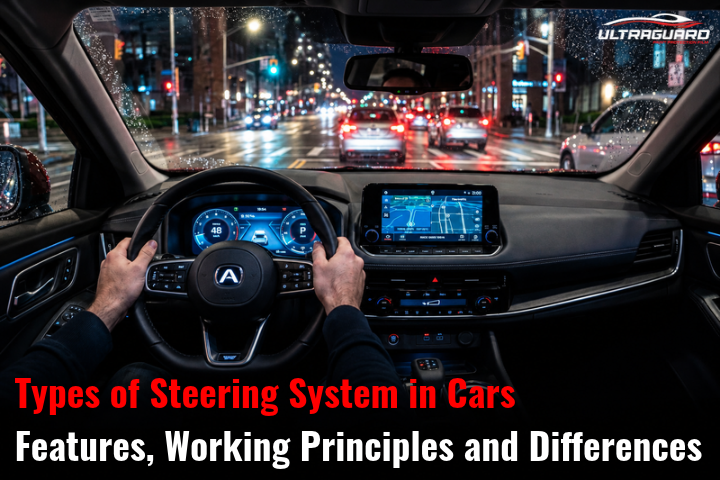
What Is an Automotive Steering System and How Does It Work?
The primary work of a steering system is to permit the driver to control the direction of the automobile's wheels. Its major function is simple: converting the steering wheel's rotary movements into the wheels' angular turn. However, the science behind it is much more complex. A good steering system should:- Lessen your driving effort
- Be precise and responsive
- Provide safety and stability
- Absorb the road shock
- Manage different speeds and terrains
Evolution of Car Steering Systems: From Manual to Electric Steering
The evolution of the steering wheel has been fascinating, similar to how an automobile is- Late 19th Century - Previous cars used a tiller system similar to boat steering. Therefore, it was simple but mostly inefficient for bigger vehicles.
- 1894—The Ackerman steering geometry was formed, ensuring that wheels could pivot slightly at different angles for a seamless turn.
- 1920s-30s - The worm and roller mechanisms became a common giving sturdier and more predictable steering.
- 1951 - Chrysler introduced the first passenger car with power steering, drastically lessening the driver's effort.
- 1990s - Rack and Pinion steering forms the global standard, generally with hydraulic assistance.
- From the 2000s onwards, the industry has shifted towards electric power steering (EPS), accelerating fuel efficiency, customisation, and integration with driver-assist technologies.
How Does a Car Steering System Work?
The car steering system explained helps us appreciate how each part works together for seamless driving. Key Components- Steering wheel - The driver’s input device.
- Steering column - Attaches the wheel to the steering gear, sometimes with foldable designs for safety.
- Steering gearbox - Transforms the rotary movement into a linear motion for wheel movement.
- Tie rods - Connect the steering gear to the wheels.
- Power assist unit (Electric/ Hydraulic) - Reduces the need for physical effort.
Types of Steering Systems in Cars
As automotive steering systems have evolved into many kinds, each has its pros and cons.1. Manual Steering System
- Usually searched in old vehicles or lightweight cars.
- Easy design, lower cost, but needs more effort.
2. Hydraulic Power Steering (HPS)
- Use hydraulic pressure from a pump driven by the engine.
- Pros - Seamless and powerful steering guidance.
- Cons - Higher fuel consumption and management are required.
3. Electric Power Steering (EPS)
- Utilise an electric motor for steering guidance.
- Pros - Fuel efficient, lightweight, permits modern driver-assist characteristics.
- Cons - A costly repair if the components fail.
4. Electro-Hydraulic Steering
- A hybrid system mixes the electric motor and hydraulic pump.
- Stabilises the efficiency and steering.
5. Four-wheel Steering (FWS)
- Allows the rear wheels to turn slightly in collaboration with the front wheels.
- Enhances the manoeuvrability at lower speeds and stability at high speeds.
6. Steer-by-Wire Systems
- Removes the mechanical link between the steering wheel and wheels.
- Entirely electronic, adaptable, and core to autonomous vehicles.
How Does a Car Steering System Affect Driving Performance?
Here are the pointers on how automotive steering systems affect driving as follows:- Highways - The hydraulic system still gives a more “linked” road feel, though the benefited EPS now rivals this.
- Luxury Cars - Steer-by-wire is appearing, enabling a smooth integration with autonomous functions.
- City Driving - EPS rules, thanks to its light feel and efficiency.
- Off-Roading - Any heavy-duty hydraulic or electro-hydraulic system stands out due to its durability.
Typical Steering Issues and Symptoms
Even the most modernised automotive steering systems can form issues over time. Some of the basic issues:- Steering Wheel Vibration - Usually linked to misaligned wheels or suspension wear.
- Noisy Steering - Whining and grinding noises suggest fluid and pump problems.
- Stiff Steering - Low power steering fluid, pump failure, or EPS motor problems generally cause it.
- Pulling to One Side - It indicates alignment issues, uneven tire pressure, or steering linkage wear.
How Does the Steering System Contribute to Driving Safety?
Your car's steering is not just about ease or comfort; instead, it's about a core safety characteristic. Responsive steering can make a massive difference in averting accidents and being a part of one. Advanced Automotive Steering Systems are designed to:- Gives lane-keeping assistance
- Work along with the stability control system
- Enhance the driver's confidence at high speed.
- Lessens fatigue while on long drives.
How Steering System Design Affects a Car’s Interior and Appearance
Though the steering system ensures seamless control, a car's visual appearance ensures it turns heads wherever it goes. Think of having a flawlessly engineered steering setup, but a faded paint or scratch would destroy the overall look. This is where the Ultraguard PPF coating for car comes into action. Like how a steering system safeguards your drive, similarly, the Ultraguard PPF safeguards your car paint against all these issues:- Harmful UV rays fade away the paint and discolour your vehicle.
- Stone chips and scratches.
- Bug splatter, bird droppings, and chemical stains.
- Swirl marks that might get by doing persistent washing.
How Are Car Steering Systems Evolving with New Technology?
With the growth of electric and autonomous vehicles, steering technology is entering a new era.- Foldable Steering Wheel - This is for autonomous cars, where the steering wheel might be withdrawn when not required.
- Steer-by-Wire Adoption - Expect more cars without any mechanical connections, providing a tailored steering feel.
- AI-Integrated Steering - A System that adapts to driving behaviour and road circumstances.
- Augmented Reality Integration - Steering being linked with AR dashboards for precision driving.
How to Maintain Your Car Steering System
There is not much to do to keep your vehicle's steering in the best condition, but yes, you need to be consistent with it.- Examine the belt and hoses for tears and wear.
- Inspect power steering fluid daily.
- Keep the tire inflated to the correct pressure.
- Match and balance the wheels around every 10,000km.
- Don't ignore the unusual vibrations and noises.
How Car Steering Systems Improve Driving Comfort and Control
Have you ever seen how two cars with the same engines can make driving difficult? Usually, the difference lies in the steering system.- SUVs generally depend on power-assisted systems to manoeuvre their bulk.
- Sports cars utilise the instant ratio steering for sharp responses.
- Luxury cars employ adaptive EPS to achieve an ideal balance between control and comfort.
How Paint Protection Film and Steering Both Contribute to Car Maintenance
There is a fantastic similarity between paint protection film and automotive steering systems as follows:- Both of them silently work on the vehicle.
- Both elevate safety, such as steering for control and the PPF on car for structural integrity.
- Both safeguard the car's long-term value along with the responsive steering and a flawless paint finish, which is much higher than its resale price.