If you want to protect your car’s paint from scratches, stone chips, UV damage, and everyday wear and tear, you’ve probably heard about Paint Protection Film (PPF).
But when it comes to installing PPF, one common question confuses most car owners:
■ Should you go for Full PPF or Partial PPF?
Is full-body coverage really worth the cost, or is it enough to protect only the high-impact areas?
In this guide, we’ll break it down in simple terms so you can confidently decide what’s best for your car.
What is PPF (Paint Protection Film)?
Paint Protection Film is a transparent, ultra-thin protective layer applied on your car’s paint.
It helps protect against:
■ Scratches and swirl marks
■ Stone chips
■ UV damage and fading
■ Minor abrasions
■ Chemical stains and bird droppings
Think of it as a clear shield for your car’s paint.
What is Full PPF?
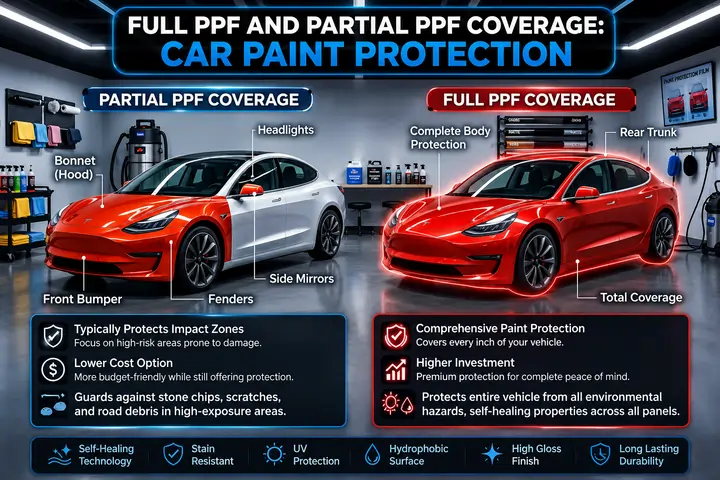
Full PPF means applying protective film on the entire car surface.
It typically covers:
■ Bonnet
■ Front and rear bumpers
■ Doors
■ Fenders
■ Roof
■ Side panels
■ Side mirrors
■ Pillars and edges (depending on installation)
Advantages of Full PPF:
■ Complete all-round protection
■ Uniform gloss and finish across the car
■ Best protection for resale value
■ Long-term peace of mind
Disadvantages:
■ High cost compared to partial PPF
■ Longer installation time
■ Higher upfront investment
What is Partial PPF?
Partial PPF involves applying film only on high-impact and high-risk areas of the car.
Commonly covered areas include:
■ Front bumper
■ Bonnet (partial or full front section)
■ Side mirrors
■ Headlight areas
■ Door handle cups
■ Door edges
Advantages of Partial PPF:
■ More budget-friendly
■ Focused protection where it matters most
■ Faster installation
■ Good option for daily city driving
Disadvantages:
■ Limited overall protection
■ Possible uneven aging over time
■ Some parts of the car remain exposed
Full PPF vs Partial PPF – Key Differences
| Feature | Full PPF | Partial PPF |
| Coverage | Entire car | Selected areas only |
| Protection level | Maximum | Moderate |
| Cost | High | Affordable |
| Appearance | Uniform finish | May show differences over time |
| Ideal for | Luxury & new cars | Budget or city-use cars |
Which One Should You Choose?
Choose Full PPF if:
■ You own a premium or new car
■ Your car value is high (₹12–15 lakh and above)
■ You plan to keep the car long-term
■ You frequently drive on highways or rough roads
■ You want maximum protection without compromise
Choose Partial PPF if:
■ You are on a moderate budget
■ Your car is mainly used for city driving
■ You want basic protection for high-impact areas
■ You are trying PPF for the first time
Real-Life Examples
If you drive a Hyundai Creta, Kia Seltos, or similar SUV mainly in city traffic:
■ Partial PPF is usually sufficient
If you own a luxury car like BMW, Mercedes, Audi, or high-end EV:
■ Full PPF is strongly recommended
Common Mistakes Car Owners Make
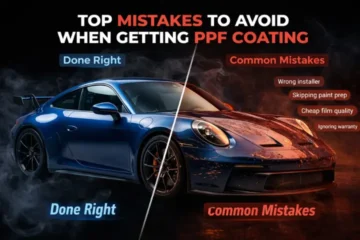
■ Choosing based only on price
■ Applying PPF only to the front bumper and expecting full protection
■ Ignoring installation quality
■ Selecting low-quality film without a warranty
■ Not understanding long-term maintenance
Is Partial PPF Enough?
Yes — but only in specific cases.
Partial PPF works well if:
■ Your driving is mostly in city conditions
■ You want protection only from stone chips and minor scratches
■ You are okay with some parts of the car aging naturally
NOTE: Unprotected areas will still be exposed to UV rays, scratches, and fading over time.
Final Recommendation
■ Choose Full PPF if you want complete protection and long-term peace of mind.
■ Choose Partial PPF if you want a cost-effective solution for essential protection.
Conclusion
Both Full PPF and Partial PPF offer valuable protection, but the right choice depends on your budget, driving habits, and long-term ownership plans.
■ If you want maximum protection and long-term value retention, go for Full PPF.
■ If you want a budget-friendly, practical solution, Partial PPF is enough.
FAQ’s – Full PPF vs Partial PPF Coverage
Q1. How long does PPF last?
High-quality PPF typically lasts 5 to 10 years, depending on usage and maintenance.
Q2. Can PPF be removed later?
Yes, it can be safely removed by professionals without damaging the paint.
Q3. Does partial PPF look different over time?
Yes, in some cases, unprotected areas may age differently compared to protected sections.
Q4. Does PPF increase resale value?
Indirectly, yes — because it preserves the original paint condition of the car.



0 Comments