Your car is one of your most valuable investments, and protecting its original paint is essential for maintaining both its appearance and resale value. That’s why Paint Protection Film (PPF) has become one of the most popular automotive protection solutions among car owners worldwide.
However, before investing in PPF, one common question comes to mind:
“How many types of Paint Protection Film are there?”
The answer isn’t as simple as saying there are two or three types.
Paint Protection Films can be classified in several ways, including their material, finish, protective technology, thickness, and overall quality. Understanding these differences helps you choose a film that matches your budget, driving habits, and long-term expectations.
In this comprehensive guide, we’ll explain every major type of Paint Protection Film, compare their features, discuss their advantages and disadvantages, and help you determine which option offers the best protection for your car.
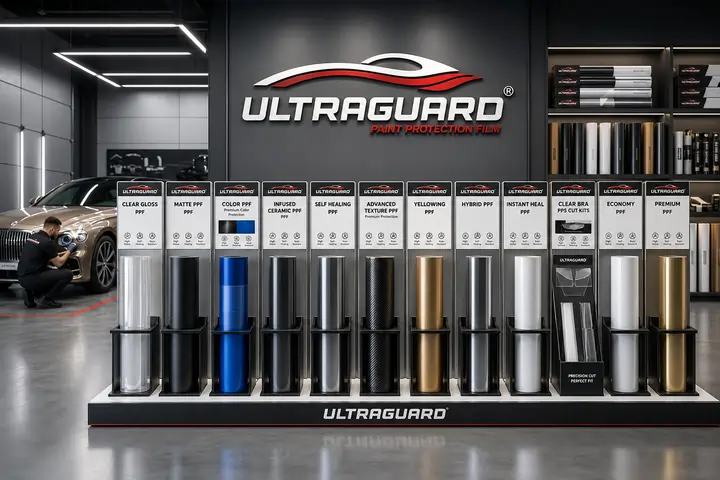
How Many Types of Paint Protection Film Are There?
There is no single number because Paint Protection Film can be categorized based on different characteristics.
Generally, PPF falls into the following categories:
• Types based on material
• Types based on surface finish
• Types based on protective technology
• Types based on thickness
• Types based on durability and warranty
Among these classifications, material type is considered the most important because it directly affects the film’s durability, flexibility, clarity, and ability to protect your car’s paint.
Let’s begin with the different material types.
Types of Paint Protection Film Based on Material
The material used to manufacture a Paint Protection Film determines how well it performs over time. It influences scratch resistance, yellowing, self-healing capability, flexibility, and lifespan.
Today, the automotive industry primarily uses three types of PPF materials.
1. TPU (Thermoplastic Polyurethane) Paint Protection Film
TPU Paint Protection Film is widely regarded as the highest-quality option available today. Most premium automotive brands and professional detailing studios recommend TPU because it delivers outstanding protection while maintaining exceptional optical clarity.
Unlike older-generation films, TPU is highly elastic, allowing it to absorb minor impacts from road debris and stone chips without cracking.
One of its biggest advantages is self-healing technology. Minor swirl marks and light scratches disappear when exposed to heat from sunlight, warm water, or the engine’s natural temperature.
Advantages of TPU Paint Protection Film
• Excellent scratch resistance
• Superior stone chip protection
• Self-healing surface
• Outstanding UV resistance
• Prevents paint oxidation
• High transparency
• Resistant to yellowing
• Long service life
• Easy to maintain
Limitations
• Higher initial investment
• Requires professional installation for best results
Best For
• Luxury cars
• SUVs
• Sports cars
• Daily-driven premium cars
• Owners looking for long-term protection
2. TPH (Thermoplastic Hybrid) Paint Protection Film
TPH Paint Protection Film is a hybrid material that combines plastic components with polyurethane to create a more affordable alternative to TPU.
It offers better protection than traditional PVC films but doesn’t match TPU in flexibility, clarity, or durability.
Some modern TPH films include limited self-healing properties, although their performance is generally less consistent than premium TPU products.
Advantages of TPH Paint Protection Film
• More affordable than TPU
• Good gloss enhancement
• Decent scratch protection
• Suitable for short- to medium-term use
• Lower installation cost
Limitations
• Lower elasticity
• May yellow faster in harsh climates
• Reduced resistance to deep scratches
• Shorter lifespan
• Limited self-healing performance
Best For
• Budget-conscious car owners
• Mid-range cars
• Temporary paint protection
• Lease cars
3. PVC (Polyvinyl Chloride) Paint Protection Film
PVC was one of the earliest materials used in Paint Protection Films.
Although it is still available in certain markets, it has largely been replaced by TPU because of its relatively poor performance.
PVC films are generally thicker and less flexible, making them harder to install around complex curves. Over time, they are also more likely to become brittle, discolor, or peel under prolonged exposure to sunlight and changing weather conditions.
Advantages of PVC Paint Protection Film
• Lowest purchase cost
• Basic paint protection
• Suitable for short-term applications
Limitations
• Can yellow over time
• Less flexible
• Lower transparency
• No true self-healing properties
• Short lifespan
• Reduced resistance to environmental damage
Best For
• Temporary protection
• Older cars
• Extremely limited budgets
TPU vs TPH vs PVC: Quick Comparison
| Feature | TPU | TPH | PVC |
| Durability | Excellent | Good | Basic |
| Scratch Resistance | Excellent | Moderate | Low |
| Self-Healing | Yes | Limited | No |
| UV Resistance | Excellent | Good | Moderate |
| Yellow Resistance | Excellent | Average | Poor |
| Flexibility | Excellent | Good | Low |
| Optical Clarity | Excellent | Good | Average |
| Lifespan | 7–10 Years* | 3–5 Years* | 2–3 Years* |
| Overall Performance | Premium | Mid-Range | Entry Level |
NOTE: Actual lifespan depends on climate, maintenance, driving conditions, installation quality, and product specifications.
Here, you will get to know more about TPU vs TPH vs PVC
Which Material is the Best?
If you’re looking for the highest level of paint protection, TPU Paint Protection Film is considered the industry benchmark. It combines durability, flexibility, optical clarity, UV resistance, and self-healing technology, making it the preferred choice for modern cars.
TPH serves as a practical middle-ground for buyers who want reliable protection at a lower price point, while PVC is generally suitable only for basic or temporary applications.
However, choosing the right PPF isn’t just about the material. The finish of the film also plays a major role in the final appearance of your car.
In the next section, we’ll explore the different types of Paint Protection Film based on finish, including Gloss PPF, Matte PPF, and specialty finishes, to help you decide which one best matches your style and driving needs.
Types of Paint Protection Film Based on Finish
While the material of a Paint Protection Film determines its durability and protective capabilities, the finish influences how your car looks after installation. The two most common finishes are Gloss PPF and Matte PPF, each offering the same core purpose—protecting your car’s paint—but delivering a completely different visual appeal.
Choosing the right finish depends on your personal style, the original paint finish of your car, and your maintenance preferences.
1. Gloss Paint Protection Film
Gloss Paint Protection Film is the most popular choice among car owners because it enhances the natural shine of a car while preserving its factory paint. The film is nearly invisible once installed, making it ideal for anyone who wants protection without changing the original appearance of the car.
Premium gloss PPF also improves paint depth and clarity, giving the surface a freshly polished look.
Benefits of Gloss PPF
• Preserves the factory finish of your car
• Enhances paint depth and gloss
• Makes washing easier
• Offers excellent UV protection
• Compatible with metallic and pearl paint finishes
• Available with self-healing and hydrophobic coatings
Best For
• New cars
• Luxury sedans
• SUVs
• Sports cars
• Owners who prefer a showroom-like shine
2. Matte Paint Protection Film
Matte Paint Protection Film transforms a glossy car into a sophisticated satin finish while providing the same level of protection against scratches, stone chips, and environmental contaminants.
If your car already has factory matte paint, installing matte PPF helps preserve its unique appearance without adding unwanted gloss.
Unlike matte vinyl wraps, matte PPF is designed primarily for paint protection rather than cosmetic customization.
Benefits of Matte PPF
• Premium satin appearance
• Protects factory matte paint
• Hides minor swirl marks
• Fingerprints are less noticeable
• Modern and distinctive styling
Best For
• Matte-finished cars
• Premium SUVs
• Performance cars
• Owners looking for a unique appearance
Gloss PPF vs Matte PPF
| Feature | Gloss PPF | Matte PPF |
| Appearance | High-gloss finish | Satin / Matte finish |
| Paint Enhancement | Excellent | Moderate |
| Factory Look | Maintains original gloss | Change glossy paint to matte |
| Cleaning | Easy | Easy |
| Self-Healing | Available | Available |
| Hydrophobic Properties | Available | Available |
| Best For | Most car owners | Style-focused enthusiasts |
Which finish should you choose?
• Choose Gloss PPF if you want to maintain your car’s original paint appearance while adding extra shine and long-term protection.
• Choose Matte PPF if you prefer a premium satin look or want to protect an existing matte paint finish.
Types of Paint Protection Film Based on Protection Technology
Modern Paint Protection Films are much more advanced than the first-generation products introduced years ago. Manufacturers now integrate specialized technologies that improve durability, reduce maintenance, and extend the life of the film.
Understanding these technologies helps you compare products beyond just their price.
1. Self-Healing Paint Protection Film
One of the biggest innovations in the PPF industry is self-healing technology.
The top layer of the film is engineered with an elastic polymer that can recover from minor scratches and swirl marks when exposed to heat. Heat from direct sunlight, warm water, or a heat gun activates the surface, allowing the film to return to its original smooth finish.
It’s important to note that self-healing technology works only on light surface imperfections. Deep cuts or severe impacts cannot repair themselves.
Advantages
• Removes light scratches automatically
• Maintains a newer appearance for longer
• Reduces polishing requirements
• Extends the visual life of the film
Ideal For
• Daily-driven cars
• Highway driving
• Premium and luxury cars
2. Hydrophobic Paint Protection Film
Hydrophobic PPF features a water-repellent top coating that prevents water, mud, dust, and road grime from bonding strongly to the surface.
Instead of spreading across the paint, water forms beads and rolls away, carrying dirt with it. This makes routine washing faster and helps maintain a cleaner finish between washes.
Benefits
• Easier cleaning
• Reduced water spots
• Less dirt accumulation
• Improved gloss retention
• Lower maintenance effort
3. Ceramic-Coated Paint Protection Film
Some premium Paint Protection Films come with a factory-applied ceramic top coat. This combines the impact resistance of PPF with many of the surface benefits associated with ceramic coatings.
A ceramic-coated PPF offers:
• Better stain resistance
• Enhanced gloss
• Stronger UV protection
• Improved chemical resistance
• Easier maintenance
Although these products provide excellent water repellency, they should not be confused with applying a standalone ceramic coating directly to the paint. The ceramic layer is integrated into the film itself.
4. UV-Resistant Paint Protection Film
Continuous exposure to sunlight can gradually fade automotive paint. High-quality Paint Protection Films include UV inhibitors that help block harmful ultraviolet rays, reducing oxidation and preserving the original paint color for years.
This feature is particularly valuable in countries like India, where cars are regularly exposed to intense sunlight.
5. Anti-Yellowing Paint Protection Film
Earlier generations of Paint Protection Film often developed a yellow tint over time. Modern premium TPU films use advanced adhesive systems and UV-resistant top coats to minimize yellowing, even after years of outdoor exposure.
Choosing a film with proven anti-yellowing performance is especially important for white, silver, and other light-colored cars where discoloration is more noticeable.
How to Choose the Right Type of PPF for Car
Selecting the best Paint Protection Film involves more than simply choosing the most expensive option. Consider your driving habits, climate, budget, and long-term ownership plans.
1. Consider Your Driving Environment
If you frequently drive on highways or rough roads where stone chips are common, a premium TPU PPF with self-healing technology provides the best long-term protection.
For city driving with occasional highway trips, a high-quality TPH film may offer a suitable balance between cost and performance.
2. Decide on the Appearance
Ask yourself how you want your car to look after installation.
• Want to preserve the original paint? Choose Gloss PPF.
• Want a bold satin finish? Choose Matte PPF.
The finish has no significant impact on protection when comparing products of similar quality—it mainly affects aesthetics.
3. Evaluate Long-Term Value
A lower-priced film may seem attractive initially, but replacing it after a few years can cost more than investing in a premium product from the beginning.
When comparing options, consider:
• Expected lifespan
• Warranty
• Scratch resistance
• UV protection
• Self-healing capability
• Installation quality
Long-term value is often more important than the initial purchase price.
4. Check the Warranty
Reputable manufacturers typically provide warranties covering issues such as:
• Yellowing
• Cracking
• Peeling
• Delamination
• Manufacturing defects
Always ask what the warranty covers and whether professional installation is required to maintain its validity.
5. Choose Professional Installation
Even the highest-quality Paint Protection Film can fail if installed incorrectly. Proper surface preparation, contamination control, and precise application are essential for achieving a seamless finish and maximizing the film’s lifespan.
Choosing an experienced installer is just as important as selecting the right product.
Which Type of Paint Protection Film Is Best?
There is no universal answer because the best Paint Protection Film depends on your priorities.
• Best overall: Premium TPU Paint Protection Film
• Best value for money: High-quality TPH Paint Protection Film
• Best appearance: Gloss PPF for factory shine; Matte PPF for a satin finish
• Best technology: Self-healing TPU with hydrophobic and ceramic-coated top layers
• Best for Indian driving conditions: UV-resistant TPU Paint Protection Film with anti-yellowing technology
For most modern cars, a premium TPU film offers the ideal combination of durability, optical clarity, self-healing performance, and long-term paint protection. While it requires a higher upfront investment, it often proves more cost-effective over the life of the car due to its extended lifespan and lower maintenance requirements.
In the next section, we’ll compare the lifespan, maintenance requirements, pricing factors, and common misconceptions surrounding different types of Paint Protection Film to help you make an informed buying decision.
TPU vs TPH vs PVC: Which Paint Protection Film Should You Choose?
Now that you understand the different materials, finishes, and technologies used in Paint Protection Film, the next step is deciding which option best suits your car. Each type has its own strengths, limitations, and ideal use cases.
Rather than focusing only on price, it’s important to compare long-term performance, maintenance requirements, and durability.
TPU vs TPH vs PVC: Complete Comparison
| Feature | TPU PPF | TPH PPF | PVC PPF |
| Material Quality | Premium | Mid-Range | Basic |
| Scratch Resistance | Excellent | Good | Moderate |
| Self-Healing | Yes | Limited (Depends on Product) | No |
| Stone Chip Protection | Excellent | Good | Basic |
| Flexibility | Excellent | Good | Poor |
| UV Resistance | Excellent | Good | Average |
| Yellowing Resistance | Excellent | Moderate | Low |
| Optical Clarity | Crystal Clear | Good | Average |
| Maintenance | Low | Medium | High |
| Average Lifespan | 7–10 Years | 3–5 Years | 2–3 Years |
| Cost | Premium | Moderate | Budget |
Expert Tip: If you’re planning to keep your car for more than five years, investing in a high-quality TPU Paint Protection Film is generally more cost-effective than replacing a lower-grade film multiple times.
How Long Does Paint Protection Film Last?
One of the most common questions among car owners is:
“How long does Paint Protection Film actually last?”
The answer depends on several factors, including the quality of the film, installation standards, driving conditions, climate, and maintenance routine.
Here’s a general lifespan estimate:
TPU Paint Protection Film
Premium TPU films typically last 7–10 years, with some high-end products offering warranties of up to 10 years when professionally installed and properly maintained.
TPH Paint Protection Film
A quality TPH film generally lasts 3–5 years. Its lifespan may be shorter if the car is frequently exposed to harsh sunlight, road debris, or extreme weather conditions.
PVC Paint Protection Film
PVC films are primarily intended for short-term use and usually last 2–3 years before signs of wear such as yellowing, peeling, or reduced clarity become noticeable.
Factors That Affect the Lifespan of Paint Protection Film
Regardless of the material, several external factors influence how long a Paint Protection Film performs effectively.
1. Climate
Cars exposed to intense sunlight, heavy rainfall, snow, or coastal environments experience greater environmental stress. High-quality UV-resistant films perform significantly better under these conditions.
2. Driving Conditions
Daily highway driving exposes the car to more:
• Stone chips
• Sand particles
• Road debris
• Insect residue
Premium films are better equipped to handle these conditions over time.
3. Installation Quality
Proper installation is just as important as choosing the right film.
Poor installation can lead to:
• Edge lifting
• Air bubbles
• Adhesive failure
• Premature peeling
• Moisture contamination
Always choose an experienced installer who follows manufacturer-recommended installation procedures.
4. Maintenance Routine
Regular maintenance helps extend the life of Paint Protection Film.
Recommended practices include:
• Hand washing using pH-neutral car shampoo
• Drying with a clean microfiber towel
• Removing bird droppings and tree sap promptly
• Avoiding abrasive polishing compounds
• Following the manufacturer’s care instructions
Simple maintenance habits can significantly improve both the appearance and longevity of the film.
What Determines the Price of Paint Protection Film?
Many people assume that Paint Protection Film is expensive simply because of the brand name. In reality, pricing depends on several technical and practical factors.
Material Type
TPU is generally the most expensive because it offers superior durability, flexibility, and self-healing properties.
TPH is positioned as a mid-range option, while PVC remains the most affordable.
Film Thickness
Paint Protection Films are available in different thicknesses, typically measured in mils.
A thicker film generally provides better impact absorption against stone chips and road debris. However, thickness alone should not be used to judge quality. The overall construction of the film—including the top coat, adhesive, and base material—is equally important.
Protective Technologies
Advanced features can increase the price of a Paint Protection Film, including:
• Self-healing technology
• Hydrophobic top coatings
• Ceramic-infused surfaces
• Anti-yellowing formulations
• UV-resistant layers
• High-gloss optical finish
These technologies improve performance and reduce maintenance over the life of the film.
Coverage Area
The amount of Paint Protection Film required also affects the total installation cost.
Common coverage options include:
Partial Front Package
Typically covers:
• Front bumper
• Partial hood
• Partial fenders
• Side mirrors
Ideal for budget-conscious buyers seeking protection in high-impact areas.
Full Front Package
Usually includes:
• Full hood
• Full fenders
• Front bumper
• Side mirrors
• Headlights
This is one of the most popular choices because it protects the areas most vulnerable to stone chips.
Full car Coverage
A complete wrap protects nearly every painted surface on the car, making it the preferred option for luxury, sports, and high-value cars.
Is Expensive Paint Protection Film Always Better?
A higher price often reflects better materials, stronger warranties, and advanced technologies, but buyers should also evaluate:
• Manufacturer reputation
• Warranty coverage
• Installation quality
• Customer reviews
• Product certifications
• After-sales support
A professionally installed mid-range TPU film can provide better value than a poorly installed premium product.
Common Myths About Paint Protection Film
Despite its growing popularity, several misconceptions still exist about Paint Protection Film.
Myth 1: All Paint Protection Films Are the Same
Reality:
PPFs vary significantly in terms of material quality, adhesive technology, top coatings, durability, and warranty. Two films may look similar initially but perform very differently over time.
Myth 2: Paint Protection Film Makes a Car Scratch-Proof
Reality:
PPF helps protect against light scratches, swirl marks, stone chips, and minor abrasions. However, it cannot prevent damage from severe impacts, sharp objects, or major collisions.
Myth 3: Self-Healing Means Every Scratch Will Disappear
Reality:
Self-healing technology repairs only light surface scratches within the film’s top layer. Deep cuts that penetrate the film require repair or replacement.
Myth 4: Paint Protection Film Turns Yellow Quickly
Reality:
Older-generation PVC films were more prone to yellowing. Modern premium TPU films include advanced UV inhibitors and anti-yellowing coatings that significantly improve long-term clarity.
Myth 5: Ceramic Coating and Paint Protection Film Are the Same
Reality:
They serve different purposes.
| Paint Protection Film | Ceramic Coating |
| Physical barrier | Liquid protective coating |
| Protects against stone chips | Does not stop stone chips |
| Self-healing (premium films) | No self-healing |
| Thick protective layer | Extremely thin layer |
| Excellent impact resistance | Primarily enhances gloss and water repellency |
Many car owners combine both solutions by applying a ceramic coating over Paint Protection Film for enhanced gloss, easier cleaning, and additional chemical resistance.
Myth 6: Paint Protection Film Requires No Maintenance
Reality:
Although PPF reduces maintenance, it still needs regular washing and proper care to maintain its appearance and performance.
Routine cleaning prevents contaminants such as bird droppings, bug splatter, tree sap, and road grime from affecting the surface over time.
Expert Tips Before Buying Paint Protection Film
Before making a decision, keep these recommendations in mind:
• Choose a reputable installer rather than selecting the lowest price.
• Ask about the film’s material (TPU, TPH, or PVC).
• Verify the warranty and what it covers.
• Request information about self-healing and anti-yellowing technologies.
• Compare total ownership cost instead of focusing only on the initial installation price.
• Follow the recommended maintenance schedule to maximize the film’s lifespan.
Making an informed choice today can help preserve your car’s appearance and resale value for many years.
In the final section of this guide, we’ll answer the most frequently asked questions about Paint Protection Film, summarize the key takeaways, and help you determine which type of PPF is the right investment for your car.
Types of Paint Protection Film for Car – FAQs
Q1. Which type of PPF is best for car?
TPU (Thermoplastic Polyurethane) Paint Protection Film is considered the best due to its durability, self-healing properties, and excellent resistance to scratches and stone chips. It also offers long-lasting clarity and UV protection.
Q2. Which PPF is better, matte or glossy?
Glossy PPF enhances your car’s original shine, while matte PPF gives it a premium satin finish. The better choice depends on your preferred look and your vehicle’s paint finish.
Q3. Which brand is best for PPF?
Several premium brands offer high-quality PPF, including Ultraguard, UltrashieldX, XPEL, STEK, SunTek, and 3M. The best choice depends on your budget, warranty, and installation quality.
Q4. What are the 4 types of coatings?
The four common automotive protective coatings are Ceramic Coating, Paint Protection Film (PPF), Graphene Coating, and Teflon Coating. Each offers different levels of paint protection and durability.
Q5. Can I drive my car 12 hours after ceramic coating?
Yes, you can usually drive your car after 12 hours, but it’s best to avoid rain, washing, or harsh conditions until the coating has fully cured, which may take several days.
Q6. Does a 5-year ceramic coating actually last 5 years?
A high-quality ceramic coating can last up to five years with proper maintenance and regular care. However, driving conditions and maintenance practices significantly affect its lifespan.
Q7. Does TPU PPF turn yellow?
Premium TPU Paint Protection Films are designed with UV-resistant technology and generally do not turn yellow under normal conditions. Choosing a trusted brand and proper installation helps maintain long-term clarity.

0 Comments