A customer called us to place windshield protection film order and asked: “I’ve protected my windshield, but am I actually cleaning it the right way?” The question is genuine because daily conditions take a serious toll on your car’s glass. The dirt, grim, oily residue, and hard water hamper the visibility. Our expert suggested: Wipe it with a microfiber cloth. Then use an IPA cleaner. Finish with glass cleaner on a clean microfiber cloth. That’s how you clean a windshield without streaks.
The conversation then shifted to windshield protection, window tinting, and window film protection. And how does windshield protection film keep glass cleaner? If you also struggle with this or just want to know how to clean a car windshield, these expert cleaning tips are for you.
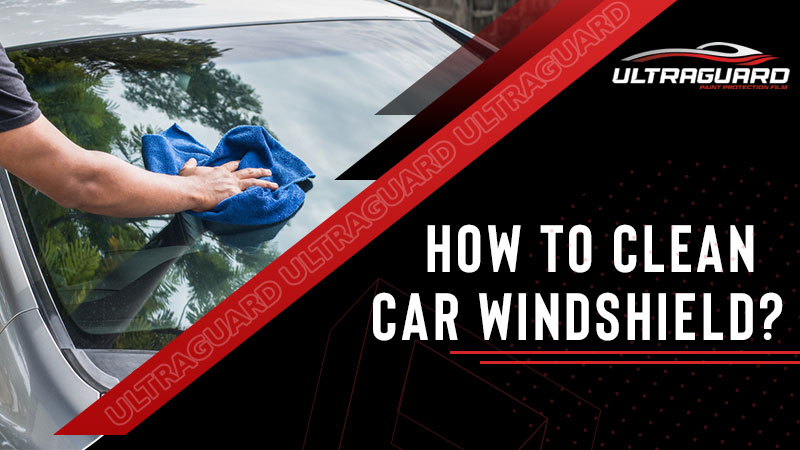
Why It’s Important to Clean a Car Windshield
It is important to clean a windshield because it directly affects visibility. It is tied to driver’s safety and the lifespan of the glass and wipers. Rain, fog, night driving, or glare conditions can be dangerous if the glass is dirty. A clean and clear windshield makes roads, hazards, pedestrians, signals and traffic visible. Why clean windshield matters:
■ better visibility while driving
■ improved night driving
■ safer driving during rain
■ longer wiper blade life
Tool You Need Before Cleaning a Car Windshield
Glass is a delicate part of your car. You can not use the same towel you use on the car body. Windshield demands specific types of tools. A microfiber glass towel, an ammonia-free glass cleaner, and an extendable windshield cleaning tool are must-haves.
Recommended Tools
■ Microfiber glass towels: Best for streak-free wiping and final buffing.
■ Extendable windshield cleaning tool: for the inside glass; base of the windshield and tight corners.
■ Ammonia-free glass cleaner: for tinted windows and interior surfaces.
■ Squeegee: exterior glass, streak-free finish.
Clay bar or glass prep tool: if the glass has bonded film, water spots, or stubborn residue.
Quick Checklist Table
| Item | Purpose |
| Microfiber Cloth | Streak-free cleaning |
| Glass Cleaner | Remove dirt |
| Vinegar Mix | Remove haze |
| Distilled Water | Spot-free finish |
Why windshield Protection is Necessary
A clean windshield:
• Improves visibility for safer driving
• Reduces glare from sunlight and headlights
• Helps wipers work effectively
• Scratches and glass damage are less likely to happen
• Keeps your car looking cleaner and newer
• Supports better resale value
Imagine you are driving at night and you have not cleaned your glass inside out. Now it has a thin layer of oil inside. This will create glare and night driving will be extremely difficult. That’s why we suggest cleaning your car glass inside and outside.
How to Clean Windshield Outside
Cleaning the glass is vital for windshield protection. If you are wondering how to clean a car windshield at home, here is the process of cleaning and window film protection:
■ Park in shade and let the glass cool
If you clean your glass in the sun, it makes cleaner dry too fast. Leaves streaks.
■ Remove loose dust first
You should not drag grit across the glass, use a dry microfiber towel or soft brush to clean it first.
■ Use a glass-safe cleaner
Spray it on the towel or lightly on the glass. Do not spray too much on the interior.
■ Clean the outside in side-to-side motions
You can spot streaks easily and follow the windshield’s curve.
■ Clean the inside in up-and-down motions
The lower area traps oily film. Use a fresh towel and reach the lower edges carefully.
■ Buff with a dry microfiber towel
Wipe away any moisture. Inspect from different angles for haze.
■ Repeat if needed
If your glass is heavily soiled, repeat the process again.
How to Clean Windshield Inside
How to clean windshield inside without streaks? This is a common question. First, clean the inside of the windshield with a dry microfiber. Now use a damp microfiber with a cleaner or soapy water. Use a second dry cloth to remove haze and streaks.
Why Inside Windshield Get Dirty
■ Dashboard off-gassing
■ Fingerprints
■ Smoke residue
■ AC airflow contamination
Here is the detailed process of how to clean windshield from the inside:
Dry-wipe first
Take a clean microfiber towel. Remove dust and loose debris.
Use a damp cloth
Not a soaking one. Spray the cleaner on the cloth, not directly on the windshield. Avoid dripping on the dash.
Wipe in overlapping motions
Use circular or cross-hatch strokes. It breaks up oily film. Cover the full surface.
Dry immediately
Follow with a second clean microfiber towel. It eliminates residue and streaks.
Check from different angles
Night glare comes from leftover haze. So inspect the glass in side light if possible.
How Often Should You Clean a Car Windshield?
Clean your car windshield at least once a week. However, the needs depend on your driving conditions, weather, wiper use and cracks. If it’s a snowstorm or just a storm, clean the glass immediately to remove the residue or ice. If you use your wiper on a regular basis, make sure you are cleaning the glass frequently.
■ Exterior: Weekly
■ Interior: Every 2-4 weeks
■ Deep clean: Monthly
■ After long highway trips: As needed
How to Clean Windshield with Wiper Fluid
To clean windshield with wiper fluid, spray your wiper fluid for a few seconds. Dampen your towel with the flowing fluid. Now use this to clean the windshield. If the glass is still dirty, repeat the process. This is the manual way. You can also use the wipers to clean windshield.
How to Clean Windshield with Wipers
To clean windshield with wipers, check the reservoir level first. The washer system is designed to spray fluid onto the glass through this. Here is the process:
Step 1: Check the washer fluid level
Step 2: Refill with the correct washer fluid
Step 3: Spray the windshield with the washer control
Step 4: Let the wipers clear away dirt and grime
Step 5: Repeat if needed for a spotless finish
Can We Use Colin on a Car Windshield?
You can use Colin on a car windshield because of its dilution with water. But you should use the microfibre towel to clean it. Otherwise, it will leave hazy residue. Colin works well on the inside glass and light dirt. But some owners still prefer automotive-specific glass cleaners for streak control. Good way to use it
■ Spray a little on the microfiber cloth.
■ Wipe the windshield.
■ Use a different dry microfiber cloth to buff.
How to Clean Windshield with Alcohol
You can clean a windshield with alcohol. But it should be diluted. If not used carefully, you will end up damaging tint, rubber seals, or interior trim. Here is the full process:
■ Park in the shade
■ Let the windshield cool
■ Mix 70% isopropyl alcohol and distilled water
■ Spray the solution on a microfiber cloth
■ Do not spray directly on the glass
■ Wipe with straight, overlapping strokes
■ Buff immediately with a second clean microfiber towel
Cautions:
■ Do not use straight alcohol on delicate trim.
■ Avoid getting excess liquid.
■ If the windshield is dirty, dust-dry it first.
How to Clean Windshield Without Streaks?
Clean it with a lint-free microfibre towel. Apply any vinegar-alcohol cleaning solution. Follow a wiping pattern of side-to-side horizontally from inside and top-to-bottom vertically from outside. If the stains are light, spray the cleaning solution on the towel, then clean the windshield. But if it’s tough, dampen cloth with isopropyl alcohol and rub in small circular motions. It cuts grease. Now comes the most important step, buffing. Use a dry microfibre towel. And now your glass is shining without streaks.
How to Remove Haze from Windshield?
Windshield haze is a cloudy, oily film that reduces visibility. In Indian conditions, off-gassing from interior plastics is your primary haze source. To remove haze from your windshield:
■ Clean both interior and exterior surfaces
■ Use isopropyl alcohol or an ammonia-free glass cleaner
■ Microfiber towels
■ Now buff dry
If the haze is stubborn, use a Magic Eraser, glass polish, or clay towel.
How to Remove Windshield Fog?
When a cooler surface comes in contact with moist air, it condenses into tiny water drops. This condensation causes windshield fog. It can happen from inside and outside.
Windshield Internal vs External Fog
| Feature | Internal Fog | External Fog |
| When common | Cold weather, rainy season | Hot/humid weather, cool mornings |
| Humidity source | Inside cabin (breath, wet items, leaks) | Outside air (rain, humidity) |
| A/C setting | Turn A/C ON, defogger ON | Turn A/C ON, use wipers |
| Recirculation | Turn OFF (fresh air drier) | Usually doesn’t matter |
| Visible clue | Wipe inside glass | Wipe outside with wipers |
To clean car windshield fog, turn on the Defroster and AC. Use outside air for drying and turn off recirculation mode. Release the humid air by cracking a window. It can also help you with stubborn condensation. For outside fog, use wipers and turn on AC gradually.
Best Homemade Anti-Fog Solution
■ Mix 1:1 vinegar and water.
■ Apply to the windshield.
■ Wipe with a clean microfiber cloth.
■ Helps prevent fog and condensation.
How to Remove Water Spots from Windshield
When there is water on your windshield, it leaves marks when the drops evaporate. The minerals (calcium, magnesium) deposits. You can not just scrape or polish them. It should be removed with chemical solutions. Use a 50/50 vinegar + water solution. Let sit 2-3 minutes. Then wipe off. You can also use clay bar, shampoo, lemon juice, or toothpaste to remove water spots from windshield.
Common Windshield Cleaning Mistakes
Car owners often do not realise the mistakes they are making while cleaning the windshield:
■ Cleaning hot glass in direct sunlight
■ Using dirty towels
■ Too much cleaner
■ Using ammonia-based cleaners on tinted glass
■ Dry-wiping dusty glass
■ Ignoring the inside windshield surface
DIY Windshield Cleaning Solutions
You don’t always need a commercial glass cleaner for windshield. Several DIY windshield cleaning solutions work like magic. They can effectively remove dirt, grease, water spots, and road grime. And the ingredients are available in your house:
| DIY Solution | Best For | How to Use |
| Vinegar+Water (1:1) | Daily cleaning, light dirt | Spray on the windshield
Wipe with a microfiber cloth. |
| Dish Soap+Warm Water | Road grime, bug splatter | Apply with a spray bottle
Clean it Dry thoroughly |
| Rubbing Alcohol+Water | Interior haze, greasy film | Spray lightly
Buff with a clean microfiber towel |
| Lemon Juice+Water | Water spots and stubborn residue | Let the solution sit for a few minutes
Then wipe |
| Dish Soap+Alcohol +Water | Heavy grease and exterior contaminants | Spray and wipe
Finish with a dry microfiber cloth. |
Window Film for Windshield Protection
Window film is a thin sheet that is made up of multi-layered plastic or PET. It blocks UV rays, reduces glare and gives you privacy. Window tints either absorb, reflect, or reject the solar energy which means that the incoming heat is reduced. The cabin and interiors stay cooler. One added advantage of window films is that it has self cleaning properties. Modern window tints come with hydrophobicity which makes them water repellent. And even dust does not rest. Window films make windshield cleaning easier.
Types of Window Film
You can choose from multiple options of window tinting available in the market. You should consider a few things before choosing window films. The IR rejection, UV rejection, and VLT. Also, do not forget to check if the film complies with CMVR rules.
■ Dyed Window Film
How it works: There is a layer of dye between adhesive and protective coating.
■ Carbon Window Film
How it works: Present carbon particles block the solar heat.
■ Ceramic Window Film
How it works: Built with nano ceramic technology.
■ Metallic Window Film
How it works: Microscopic metal particles reflect heat and glare.
■ Window Films Comparison
| Film Type | Heat Rejection | Visibility | UV Protection | Cost |
| Dyed | Low | Good | Moderate | Low |
| Carbon | Moderate | Very Good | High | Medium |
| Ceramic | Excellent | Crystal Clear | 99% | High |
| Metallized | High | Reflective | High | Medium-High |
| Hybrid | Moderate | Good | High | Medium |
| UV Protection Film | Low | Crystal Clear | 99% | Medium |
| Nano-Ceramic | Excellent | Crystal Clear | 99% | High |
How Window Tinting Makes Windshield Cleaning Easier
Window tinting is primarily for heat. Although they can have cleaning benefits due to their advanced structure.
Here are the benefits:
| Benefit | Cleaning Advantage |
| Reduced Water Spots | Less mineral residue after rain or washing |
| Less Dirt Buildup | Dust and grime are easier to remove |
| Lower Heat Exposure | Bugs, sap, and bird droppings are less likely to bake onto the glass |
| Reduced Glare | Streaks and smudges are easier to spot while cleaning |
| UV Protection | Helps prevent wiper-related residue and streaking |
| Easier Maintenance | Requires less effort during routine cleaning |
Why Ultraguard Windshield Protection Film Makes Windshield Cleaning Easier
Windshield Protection Film acts as a sacrificial layer over the windshield. It makes contaminants easier to remove before they bond permanently to the glass.
At Ultraguard, we offer ultra-clear nano ceramic film. Our range of Ultraguard NCT Window Film reduces the risk of chips and pitting caused by road debris. It makes the surface smoother which means less scrubbing and better visibility. Think of Ultraguard window tinting as an extra layer of windshield protection.
Our range has:
■ Thickness: 2 mil
■ IR Rejection: 95%
■ UV Rejection: 99%
■ Glare Reduction: 20-90%
■ VLT: 5 to 80%
■ TSER: 52 to 80%
Choosing the Right Windshield Cleaning Tools with Ultraguard
Not all windshield cleaning tools are made of the same quality. Low-quality towels can leave lint behind. Harsh cleaners can damage glass coatings, Window Tinting, or Window Film Protection. Professional-grade products must be used for windshield protection.
Here Is What We Offer
The right tools not only improve visibility but also help protect your glass and window films.
■ Ultraguard Blue Squeezee: Removes water
■ Ultraguard Green Squeezee: Curved glass cleaning
■ Ultraguard Max Squeezee: Quick drying
■ Window Tinting Filter: Cleans tight gaps
■ Car Soak Shield Rope: Absorbs water
■ Glass Magnetic Sticker: Better organization
■ Multi Color Squeezee: Water removal
■ Orange Blue Max Squeezee: Fast drying
■ Stainless Steel Blade (10 Pcs Box): Clears residue
■ Tinting Dashboard Microfiber: Removes haze
Conclusion
Always use a microfibre cloth in a particular direction to clean your windshield. Windshield protection is essential for driving safety and optical clarity. Windshield protection film is also worth considering. It gives your glass a protective layer that shields it from minor chips and scratches. It also makes cleaning easier because modern window film protection has hydrophobic qualities that repel water. Water drops bead up and roll off quickly. Ultraguard’s window tinting solutions are the best ones that reduce cleaning frequency and improve visibility.
Clean glass is good. Windshield protection is better.
Whether you’re looking for professional windshield protection or high-quality cleaning tools. We have everything.
FAQ’s – Car Windshield Cleaning – Best Ways
Q1. How to clean car windows inside and out?
Always start with the outside after you wash the car. Then move inside. Use ammonia-free glass cleaner and fresh microfiber towels. Clean in circular motions. Buff with a lint-free towel.
Q2. Does windshield protection film make cleaning easier?
Yes, Windshield protection film makes the cleaning of your glass easier because it creates a layer over it and protects it from dirt and contamination bonding. Some of them are water repellent too.
Q3. What is the best thing to clean a car windshield with?
Use an ammonia-free, alcohol-based automotive glass cleaner. And if you are looking for a budget option, go for an IPA cleaner.
Q4. How to get windshield crystal clear?
There is a 5-step professional process: deep clean both sides, remove contaminants with clay bar, polish if needed, apply glass sealant, and maintain weekly.


0 Comments