Your car’s paint does more than make the vehicle look good. It protects the underlying body from corrosion and plays an important role in maintaining the vehicle’s appearance and resale value. However, everyday driving exposes automotive paint to stone chips, road debris, scratches, UV rays, bird droppings, tree sap, stains, and other environmental contaminants.
This is where Paint Protection Film (PPF) can help. PPF is a transparent or colored protective film designed to create a physical barrier between your vehicle’s painted surfaces and everyday road hazards.
Modern Paint Protection Film is available in different finishes and technologies, including clear, matte, black, colored, textured, chrome, and printable films. Many premium films also use self-healing technology, which can help minor surface scratches disappear when exposed to suitable heat.
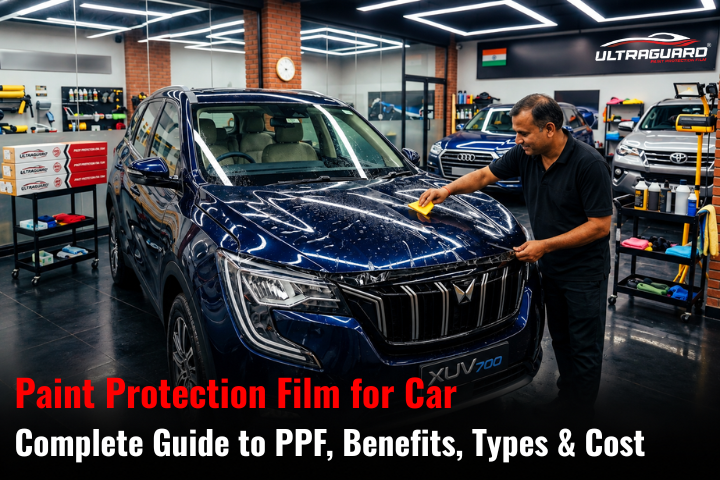
What Is Paint Protection Film for a Car?
Paint Protection Film, commonly called PPF, is a flexible thermoplastic polyurethane (TPU) film applied to selected painted surfaces of a vehicle to help protect the original paint from physical and environmental damage.
PPF is sometimes called a clear bra when used on the front portion of a vehicle. Unlike a traditional vehicle wrap, the primary purpose of PPF is paint protection, although colored and specialty PPF can also change the appearance of the vehicle.
The film can be installed on individual panels or across a larger portion of the vehicle depending on the owner’s requirements.
How Does Paint Protection Film Work?
PPF creates a protective layer over the vehicle’s paint. When the car encounters small stones, road debris, minor abrasions, or environmental contaminants, the film acts as a sacrificial barrier between the hazard and the original paint.
The performance of PPF depends on factors such as film construction, TPU quality, thickness, adhesive technology, installation quality, vehicle usage, climate, and maintenance.
Key Characteristics of Modern Car PPF
Modern Paint Protection Film can offer several features:
● High transparency: Clear PPF is designed to preserve the original appearance of the vehicle.
● Impact resistance: The film can absorb or resist impacts from small road debris.
● Self-healing technology: Certain films can reduce the appearance of minor surface scratches when exposed to suitable heat.
● UV resistance: PPF can help protect the underlying paint from prolonged environmental exposure.
● Hydrophobic properties: Some films repel water and contaminants, making routine cleaning easier.
● Flexible construction: Quality PPF is designed to conform to curved and complex vehicle panels.
Where Is PPF Usually Applied on a Car?
Paint Protection Film can be installed on individual panels or the entire painted exterior, depending on the package selected.
Common high-impact areas include:
Front Bumper
The front bumper is exposed to stones, gravel, insects, and road debris. PPF can help reduce paint damage caused by these everyday hazards.
Hood
The hood frequently encounters stone chips, dust, sand, insects, and UV exposure. Applying PPF can help preserve the paint finish.
Fenders
Front fenders can experience stone impacts and abrasion from road debris, particularly during highway driving.
Side Mirrors
Side mirrors are exposed to minor impacts, scratches, and environmental contaminants and can benefit from protective film.
Door Handle Areas
These areas can develop fingernail scratches and surface marks from frequent use.
Door Edges
PPF can help protect vulnerable door edges from chips and scratches caused by opening doors in tight spaces.
Headlights
Specialized protective films can be applied to compatible headlight surfaces to help protect against minor scratches and road debris.
Other Panels
Depending on the vehicle and installation package, PPF can also be applied to pillars, rocker panels, luggage areas, roof sections, bumpers, and other painted surfaces.
How Is Paint Protection Film Constructed?
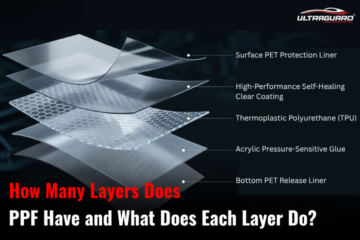
A typical PPF consists of multiple functional layers. The exact construction can vary between manufacturers and products.
1. Protective Liner
A protective liner shields the film during manufacturing, transportation, storage, and preparation for installation.
2. Surface Coating
The top surface coating contributes to the film’s appearance, stain resistance, UV resistance, and, in applicable products, self-healing performance.
3. TPU Layer
Thermoplastic Polyurethane (TPU) is the primary protective layer in many premium PPF products. It provides flexibility, durability, and resistance to impacts and everyday environmental exposure.
4. Adhesive Layer
The pressure-sensitive adhesive allows the film to bond to the vehicle’s surface when properly installed.
5. Release Liner
The release liner protects the adhesive before installation and is removed during the application process.
Benefits of Paint Protection Film
1. Helps Protect Against Rock Chips
Small stones and road debris can chip automotive paint, particularly on bumpers, hoods, and fenders. PPF provides a physical layer between the road hazard and the original paint.
2. Helps Reduce Minor Surface Scratches
Everyday contact, washing, branches, and other minor abrasions can mark the paint. Certain PPF products with self-healing technology can reduce the appearance of minor surface scratches when exposed to appropriate heat.
3. Helps Protect Against UV Exposure
Long-term UV exposure can contribute to fading and deterioration of automotive finishes. PPF can provide an additional protective layer over the paint.
4. Helps Protect Against Environmental Contaminants
Bird droppings, tree sap, insects, road grime, and other contaminants can affect automotive paint if left untreated. PPF can act as a sacrificial barrier and make the affected surface easier to maintain.
5. Helps Preserve the Original Finish
By reducing exposure to everyday damage, PPF can help maintain the vehicle’s original paint appearance.
6. Maintains the Original Appearance
Clear PPF is designed to protect the paint without significantly changing its original color or finish.
7. Can Offer Hydrophobic Protection
Some PPF products feature hydrophobic surface technology that helps water and contaminants bead and roll off more easily.
Types of Paint Protection Film
Different PPF products are designed for different appearance and performance requirements.
Clear Paint Protection Film
Clear PPF is designed to protect the vehicle while maintaining its original paint color and appearance. It is commonly used when the owner wants protection without changing the vehicle’s styling.
Matte Paint Protection Film
Matte PPF provides a non-gloss or satin-style appearance while adding paint protection. It can also be used on vehicles with compatible matte finishes.
Black Paint Protection Film
Black PPF combines a black visual finish with protective properties. It can be used on selected panels such as roofs, pillars, hoods, trims, and other compatible surfaces.
Color Paint Protection Film
Color PPF allows vehicle owners to change the visual appearance of selected panels or the entire vehicle while adding a protective film layer.
Gloss-Enhanced PPF
Certain premium PPF products are designed to provide a high-gloss appearance along with protective properties and, in some products, hydrophobic technology.
Printable PPF
Printable PPF is designed to accept compatible digital graphics or designs. It can be used for customized automotive graphics while adding a protective film layer.
Texture PPF
Textured PPF can provide finishes such as carbon-fiber-inspired or brushed-metal appearances while offering protection against everyday wear.
Chrome PPF
Chrome-style PPF provides a reflective appearance while functioning as a protective film for compatible applications.
Sunroof Protection Film
Specialized sunroof protection film is designed for compatible sunroof surfaces and can help reduce exposure to scratches, debris, and UV radiation while maintaining visibility.
Paint Protection Film vs Ceramic Coating
PPF and ceramic coating are both used for vehicle protection, but they perform different functions.
| Feature | Paint Protection Film | Ceramic Coating |
|---|---|---|
| Physical film layer | Yes | No |
| Stone-chip protection | Designed for this purpose | Limited |
| Scratch protection | Higher physical protection | Limited surface protection |
| Hydrophobic properties | Available on some films | Strong |
| Gloss enhancement | Available | Strong |
| Thickness | Physical film | Thin coating |
| Main purpose | Physical and environmental protection | Surface protection, gloss and easier maintenance |
PPF is generally selected when physical protection from road debris and paint damage is a major concern. Ceramic coating is commonly selected for gloss, hydrophobic performance, and easier maintenance.
Some vehicle owners use compatible ceramic coatings or other surface treatments over PPF. Product compatibility should always be confirmed before application.
Paint Protection Film Installation Process
Professional PPF installation requires careful preparation and accurate application.
Step 1: Vehicle Cleaning
The vehicle is thoroughly cleaned to remove dirt, grease, dust, and surface contaminants.
Step 2: Paint Decontamination
Embedded contaminants are removed to create a clean surface for installation.
Step 3: Paint Inspection and Correction
The paint is inspected before application. Depending on its condition, paint correction or polishing may be recommended.
Step 4: Pattern Selection and Film Cutting
The film is cut according to the selected vehicle panel or template. Precision-cut patterns can help reduce unnecessary cutting on the vehicle.
Step 5: Film Application
The installer positions and applies the film carefully to the prepared surface using the appropriate installation method for the product.
Step 6: Conforming and Finishing
The film is carefully stretched, positioned, and conformed around the panel. Edges and corners are finished to achieve a clean appearance.
Step 7: Final Inspection
The completed installation is inspected for alignment, edges, bubbles, contamination, and overall finish.
Installation time depends on vehicle size, coverage, film type, panel complexity, preparation requirements, and installer experience.
Paint Protection Film Cost
The price of PPF varies considerably because there is no single price applicable to every vehicle.
The total cost can depend on:
● Vehicle size
● Number of panels covered
● Partial or full-car coverage
● PPF material and technology
● Film brand
● Film finish
● Installation complexity
● Paint condition
● Installer experience
● Warranty terms
For this reason, customers should compare quotations based on film specification, coverage, installation quality, warranty, and after-sales support, rather than comparing price alone.
Partial PPF vs Full-Car PPF
Partial Front PPF
Usually focuses on high-impact areas such as the front bumper, selected hood areas, fenders, and mirrors.
Full Front PPF
Provides broader coverage across the vehicle’s front-end areas.
Full-Car PPF
Covers most or all compatible painted exterior panels and generally costs more because of the greater amount of material and installation work required.
How Long Does PPF Last?
The lifespan of PPF depends on the film, installation quality, climate, UV exposure, driving conditions, washing practices, and maintenance.
High-quality PPF can be designed for several years of service, but actual lifespan varies by product and usage. Always check the manufacturer’s stated durability and warranty terms for the specific film being installed.
How to Maintain Paint Protection Film
PPF does not require complicated maintenance.
Recommended Maintenance Practices
● Wash the vehicle regularly with a suitable automotive shampoo.
● Use clean microfiber towels.
● Avoid aggressive brushes and abrasive cleaning methods.
● Remove bird droppings and tree sap promptly.
● Avoid allowing harsh contaminants to remain on the film for long periods.
● Follow the film manufacturer’s care recommendations.
● Use compatible products if applying wax, sealants, or coatings.
● Proper maintenance helps preserve the appearance and performance of the film.
Is Paint Protection Film Worth It?
The value of PPF depends on the vehicle, driving conditions, budget, and the owner’s priorities.
PPF may be particularly relevant for owners who:
● Have purchased a new vehicle.
● Drive frequently on highways.
● Regularly encounter gravel or road debris.
● Want to preserve the original paint finish.
● Own a vehicle where paint repair is expensive.
● Want physical protection rather than only surface gloss.
● Want to reduce visible damage from everyday driving.
The right coverage level also depends on usage. Some owners may prefer protection only on high-impact areas, while others may choose broader or full-car coverage.
Why Choose Ultraguard Paint Protection Film?
Ultraguard offers automotive protection solutions including Paint Protection Film designed to help protect vehicle surfaces against scratches, stone chips, UV exposure, stains, and everyday road damage.
Ultraguard PPF uses a premium TPU-based construction and is available in different finishes and applications. Depending on the product, features can include self-healing technology, hydrophobic performance, and different visual finishes.
Self-Healing Technology
Ultraguard’s applicable PPF products use self-healing technology designed to reduce the appearance of minor surface scratches when exposed to suitable heat.
Premium TPU Construction
TPU provides the flexibility and protective characteristics required for automotive PPF applications.
Slip-On Gel Application System
Ultraguard uses a proprietary Slip-On Gel application system for applicable installations, designed to help installers position and apply the film smoothly and precisely.
Impact Protection
The film is designed to provide a protective barrier against everyday road debris, stone chips, and minor surface damage.
UV and Environmental Protection
PPF provides an additional barrier between the vehicle’s paint and environmental exposure such as UV radiation, contaminants, and road grime.
Multiple PPF Finishes
Ultraguard offers different PPF solutions, including clear, matte, black, color, gloss, texture, chrome, and printable options, subject to product availability.
FAQ’s – Paint Protection Film
PPF Basics
1. What is Paint Protection Film?
Paint Protection Film is a flexible protective film applied to a vehicle’s painted surfaces to help protect the original paint from stone chips, scratches, road debris, environmental contaminants, and other everyday hazards.
2. What does Paint Protection Film do?
PPF creates a physical protective layer over the paint. It is primarily designed to reduce damage from road debris, minor scratches, chips, and environmental contaminants.
3. How does PPF protect car paint?
PPF acts as a sacrificial barrier between the vehicle’s paint and external hazards. Its film structure can absorb or resist minor impacts and abrasions that would otherwise contact the paint directly.
4. Is Paint Protection Film transparent?
Clear PPF is designed to be highly transparent so the vehicle’s original paint color remains visible. Other PPF products, such as matte, black, or color films, intentionally change the appearance.
5. Is PPF permanent?
No. PPF is a removable protective film rather than a permanent modification to the paint. Its service life depends on the product, installation, environment, and maintenance.
6. Can PPF be installed on any car?
PPF can be installed on many types of vehicles, but compatibility depends on the surface, paint condition, panel design, and film application requirements.
7. Can PPF be applied to a new car?
Yes. Installing PPF on a new car is common because the original paint is generally in better condition and can be protected before significant road damage occurs.
Protection & Performance
8. Does PPF protect against stone chips?
Yes. One of the primary purposes of automotive PPF is to help protect painted surfaces against small stones and road debris.
9. Does PPF prevent scratches?
PPF can help prevent or reduce many minor surface scratches, but it cannot guarantee protection against every type of scratch or impact.
10. Does PPF protect against UV rays?
PPF can provide an additional barrier against UV exposure. The level of UV protection depends on the specific film.
11. Does PPF protect against bird droppings?
PPF can help protect the underlying paint from bird droppings, but contaminants should still be removed as soon as possible.
12. Does PPF protect against tree sap?
It can provide a protective barrier against tree sap, but prolonged exposure to contaminants can still affect the film’s surface. Prompt cleaning is recommended.
13. Does PPF protect against road salt?
PPF can help protect the underlying paint from exposure to road salt and other road contaminants. Regular washing remains important.
14. Does PPF protect against chemical stains?
Some PPF products offer resistance to stains and environmental contaminants. However, strong chemicals should not be left on the film for extended periods.
15. Can PPF protect against deep scratches?
PPF is designed primarily for protection against minor and moderate everyday damage. A severe impact or deep scratch can penetrate the film and potentially reach the paint underneath.
Self-Healing & PPF Technology
16. What is self-healing PPF?
Self-healing PPF uses a specialized surface technology that can reduce the visibility of minor scratches and swirl marks when exposed to appropriate heat.
17. How does self-healing PPF work?
Heat can cause the surface layer of compatible PPF to soften or reorganize, helping minor surface marks become less visible.
18. Can self-healing PPF repair deep scratches?
No. Self-healing technology is intended for minor surface scratches and marks. Deep cuts or damage that penetrates the film generally cannot be repaired through self-healing.
19. Does self-healing PPF need heat?
Heat is commonly used to activate the self-healing properties of compatible films. The exact temperature and activation method depend on the product.
20. Does every PPF have self-healing technology?
No. Self-healing capability varies between PPF products. Buyers should check the specifications of the specific film.
21. What is TPU in Paint Protection Film?
TPU stands for Thermoplastic Polyurethane. It is a flexible polymer commonly used as the primary protective layer in premium automotive PPF.
22. Why is TPU used for PPF?
TPU offers a combination of flexibility, durability, impact resistance, and optical properties that make it suitable for automotive protective film applications.
PPF Types
23. What are the different types of PPF?
Common PPF categories include clear, matte, gloss, black, color, textured, chrome, and printable films. Specialty films are also available for applications such as sunroofs and other surfaces.
24. What is clear PPF?
Clear PPF is a transparent protective film designed to protect the vehicle while preserving the original paint appearance.
25. What is matte PPF?
Matte PPF provides a low-gloss or satin-style finish while adding a protective film layer to the vehicle.
26. What is black PPF?
Black PPF is a protective film with a black visual finish. It can be used to create black styling elements while adding protection to compatible surfaces.
27. What is color PPF?
Color PPF combines color customization with paint protection. It can be used to change the appearance of compatible vehicle panels while protecting the original surface underneath.
28. What is chrome PPF?
Chrome PPF is a reflective-style protective film designed to provide a distinctive visual appearance along with the protective characteristics of compatible PPF.
29. What is textured PPF?
Textured PPF uses a textured surface to create a specific visual effect, such as a carbon-fiber-inspired or brushed finish, while providing surface protection.
30. What is printable PPF?
Printable PPF is designed to accept compatible digital graphics or printed designs, allowing customization while maintaining a protective film layer.
31. What is sunroof protection film?
Sunroof protection film is designed for compatible sunroof surfaces to help protect against scratches, debris, and UV exposure while maintaining visibility.
Installation
32. How is PPF installed?
The vehicle is cleaned and decontaminated before the film is positioned and applied to the selected panels. The installer then conforms and finishes the film around the vehicle’s contours.
33. How long does PPF installation take?
Installation time varies according to the vehicle, coverage area, film type, panel complexity, preparation requirements, and installer experience. Partial installations generally take less time than full-car installations.
34. Does PPF require paint correction before installation?
Not always. However, if the existing paint has scratches, swirl marks, oxidation, or other imperfections, paint correction may be recommended before PPF installation because the film can preserve the condition of the surface underneath.
35. Can PPF be installed on a used car?
Yes. PPF can be installed on a used vehicle if the paint and surface are suitable. Existing paint defects may need correction before installation.
36. Can PPF be removed?
Yes. Properly installed PPF can generally be removed when replacement or removal is required. The removal process should be performed carefully.
37. Does removing PPF damage the paint?
When compatible PPF has been properly installed and removed using appropriate techniques, it is designed to come off without damaging healthy factory paint. The condition of the underlying paint and any previous repainting can affect removal.
38. Is professional PPF installation necessary?
Professional installation can provide better alignment, edge finishing, panel coverage, and overall appearance, particularly for complex vehicle surfaces.
PPF Cost & Buying
39. How much does Paint Protection Film cost?
PPF pricing varies according to the vehicle, coverage area, film specification, brand, finish, installation complexity, and installer. A reliable quote should specify exactly what panels and film are included.
40. How much does full-car PPF cost?
Full-car PPF generally costs more than partial coverage because it requires more material and installation time. The actual price varies significantly between vehicles, films, and installers.
41. How much does partial PPF cost?
Partial PPF is generally less expensive than full-car coverage because fewer panels are protected. The price depends on the selected panels and film.
42. What factors affect PPF price?
Major factors include vehicle size, coverage area, film type, film brand, finish, material quality, installation complexity, paint preparation, installer experience, and warranty terms.
43. Is expensive PPF always better?
Price alone does not determine PPF quality. Buyers should compare film construction, TPU quality, optical clarity, self-healing technology, warranty, installation quality, and after-sales support.
44. Does car size affect PPF cost?
Yes. Larger vehicles generally require more film and installation work, which can increase the total cost.
45. Does the type of PPF affect its price?
Yes. Different finishes and technologies can have different material and installation costs.
46. Should I choose partial or full-car PPF?
The choice depends on your driving conditions, budget, vehicle usage, and protection requirements. High-impact areas can be prioritized if full-car coverage is not required.
Lifespan & Warranty
47. How long does PPF last?
PPF lifespan varies by product, installation quality, climate, UV exposure, driving conditions, and maintenance. High-quality films are designed to provide protection for several years.
48. What affects the lifespan of PPF?
Climate, UV exposure, vehicle usage, washing methods, chemical exposure, film quality, installation quality, and maintenance can all affect film lifespan.
49. Does PPF turn yellow over time?
The resistance to yellowing depends on the film’s materials, construction, UV resistance, environmental exposure, and maintenance. Quality PPF is engineered to maintain optical clarity for its intended service life.
50. When should PPF be replaced?
Replacement may be considered when the film develops significant discoloration, cracking, lifting, excessive surface damage, or reaches the end of its intended service life.
51. Does PPF come with a warranty?
Many branded PPF products are offered with manufacturer or installer warranties. Warranty duration and coverage vary, so buyers should review the specific warranty terms before installation.
PPF Maintenance
52. How do you clean a car with PPF?
Wash the vehicle using a suitable automotive shampoo and clean microfiber materials. Avoid aggressive brushes and abrasive methods that can unnecessarily stress the film.
53. Can you pressure wash PPF?
Pressure washing may be possible when performed correctly, but high-pressure water should not be directed aggressively at exposed film edges or damaged areas. Follow the manufacturer’s maintenance recommendations.
54. Can you wax a car with PPF?
Some waxes and surface products can be used on compatible PPF, but product compatibility should be confirmed before application.
55. Can you use car shampoo on PPF?
Yes, a suitable automotive shampoo can generally be used for routine PPF maintenance. Avoid harsh chemicals that are not recommended for the film.
56. How should bird droppings be removed from PPF?
Bird droppings should be removed as soon as possible using appropriate cleaning methods. Avoid aggressively rubbing dried contaminants against the film.
57. How do you maintain self-healing PPF?
Regular washing, prompt removal of contaminants, avoiding abrasive cleaning methods, and following the manufacturer’s care instructions can help maintain the film’s surface.
PPF Comparisons
58. What is the difference between PPF and ceramic coating?
PPF is a physical film designed to provide protection against physical damage such as stone chips and scratches. Ceramic coating is a liquid coating primarily associated with gloss, hydrophobic properties, and surface protection.
59. Is PPF better for stone-chip protection than ceramic coating?
PPF is specifically designed as a physical protective film and is generally more suitable for reducing damage from stone chips than a thin ceramic coating.
60. Can ceramic coating be applied over PPF?
Compatible ceramic coatings can be applied over some PPF products. However, compatibility should be confirmed with the PPF and coating manufacturers before application.
61. Can PPF and ceramic coating be used together?
Yes, compatible products can be combined in some applications. PPF provides the physical film layer while a compatible coating may add hydrophobic and surface-maintenance benefits.
62. What is the difference between PPF and a car wrap?
Traditional vinyl wraps are primarily used for changing a vehicle’s appearance, while PPF is specifically engineered for paint protection. Color PPF can combine appearance customization with protective properties.
63. Is matte PPF better than gloss PPF?
Neither finish is universally better. Gloss PPF is suitable for owners who want to maintain or enhance a glossy appearance, while matte PPF is suitable for those who prefer a satin or matte look.
Vehicle-Specific Questions
64. Is PPF worth it for a new car?
PPF can be useful for a new car because it allows owners to protect the original paint before substantial road damage occurs.
65. Is PPF useful for luxury cars?
PPF can be particularly relevant for vehicles where maintaining the original paint finish is a priority. The appropriate coverage depends on the vehicle and owner’s requirements.
66. Is PPF useful for highway driving?
Highway driving can expose the front of a vehicle to stones, gravel, insects, and road debris. PPF can provide an additional protective layer in these high-impact areas.
67. Can PPF be installed on a black car?
Yes. Clear PPF can be applied to black vehicles while preserving their original color. Black, matte, and colored PPF options can also be considered for styling purposes.
68. Can PPF be installed on a white car?
Yes. Clear PPF is commonly used on white vehicles, while suitable colored or specialty films can also be considered depending on the desired appearance.
69. Can PPF be installed on a luxury or performance vehicle?
Yes. PPF can be installed on many luxury and performance vehicles, provided the film and application are compatible with the vehicle’s surfaces.
70. Is PPF suitable for electric vehicles?
PPF can be used on compatible electric vehicles just as it can on conventional vehicles. The appropriate panels and coverage depend on the vehicle design and owner’s requirements.
Conclusion
Your car’s paint is continuously exposed to road debris, scratches, UV radiation, contaminants, and everyday wear. Once the original paint is damaged, restoring the factory finish can be expensive and time-consuming.
Paint Protection Film provides a physical protective layer designed to help reduce many forms of everyday paint damage. From clear and matte PPF to color, black, textured, chrome, and printable options, today’s PPF market offers solutions for different protection and styling requirements.
The right choice depends on your vehicle, driving conditions, desired appearance, coverage requirements, film specifications, installation quality, and budget.
For vehicle owners looking for a combination of paint protection and appearance preservation, a properly selected and professionally installed PPF can be an effective part of a long-term vehicle protection strategy.
Ultraguard offers a range of automotive PPF solutions, including premium TPU-based films and products with features such as self-healing technology, hydrophobic performance, and different finish options. Its Slip-On Gel application system is designed to support smooth and precise PPF installation.


0 Comments