Do you also face the instant wave of heat the moment you sit in your car? And do you know the best option that can protect your car’s interior from this heat wave? Then a window tint can be the best option for you; it helps block the IR and UV rays entering through the windows. But window tint is not just about making the window darker. A good and high-quality window tint for cars can block the IR heat and the UV rays that damage the interior of the car. Proper knowledge of these window films can help you protect the interior of your car.
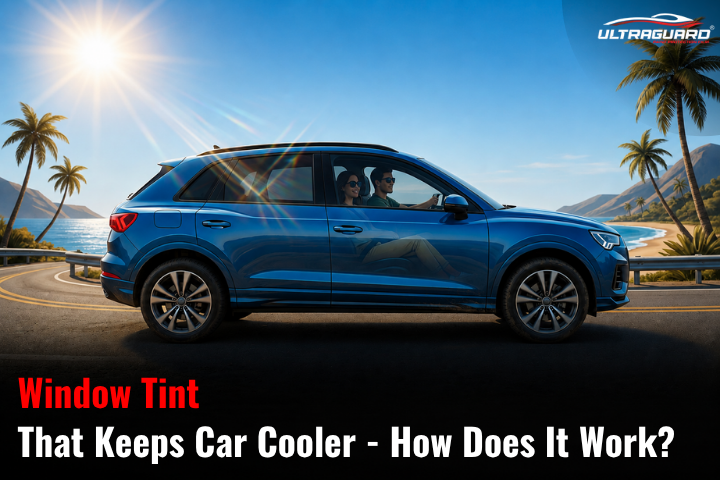
Does Window Tint Really Help to Keep the Car Cooler?
Yes, a good quality window tint can really help to keep your car cooler. It blocks the sunlight that is entering through the cabin, making the interior very comfortable, especially if you are driving or have parked your car.
Window films are available in different VLT levels, allowing car owners to choose an option based on comfort, visibility, privacy, and local requirements. Under which the nano ceramic tint can range up to 96% IR rejection, 99% UV rejection, and 83% TSER, which also depends on the film quality that you choose.
How Does a Car Window Film Help to Reduce Heat
The window tint helps to protect the interior of the car, as it does not allow heat and sunlight to enter the vehicle cabin. A high-performance film is designed to control different parts of this solar energy. Depending on its construction, the film can absorb or reject solar energy and reduce the amount of heat entering the cabin.
● It Helps Reject Infrared Heat
Infrared radiation is an important contributor to the heat you feel inside a vehicle. Advanced films are designed to reduce the amount of IR radiation passing through the glass. That’s the main reason why high-quality film can always feel cooler even if its appearance is light.
This is why you cannot judge a film’s performance based on the darkness of the film.
● It Blocks Harmful UV Rays
Heat is not the only concern when sunlight enters your car. UV exposure can also affect your car’s interior if it is exposed for a longer period of time. A quality window film can help to reduce the high amount of UV radiation. This can help to reduce the damage from the sun to materials such as seats, dashboards, and other interior surfaces.
● It Reduces Overall Solar Heat
Looking only at IR rejection does not always tell the complete story. Total Solar Energy Rejected (TSER) is another useful specification because it considers the overall amount of solar energy rejected by the film.
This is useful when comparing different films because a tint’s overall heat-rejection performance depends on more than one part of the solar spectrum.
Why is Ceramic Film for Cars so Popular?
If you also want to reduce the heat without making the glass of your car look darker, ceramic window film for cars can be the best option that you can choose.
Ceramic film uses advanced technology that helps to block UV rays. They are not like traditional or other film that blocks the signal from the GPS, mobile phones, Bluetooth, or any other electronic devices.
A high-quality nano ceramic tint is made in such a way that helps to reduce heat, block UV rays, improve privacy, and maintain clear visibility. It also comes in different VLT options, so depending on your choice you can also choose the darker and the lighter shades based on your choice.
Darker Tints helps in Cooling? Is this a myth?
Yes, this is one of the most common myths, as a darker shade of the film does not always mean that the film has the ability to reject heat.
VLT (Visible Light Transmission) describes how much light can pass through the film. A lower VLT means that the film will be darker, and a higher VLT means that the lighter shade of the film.
Heat rejection also depends on the film’s construction and its ability to control solar energy. So, while choosing a tinted film for your car, first check the IR rejection, UV rejection, and the TSER.
What are the major Benefits of installing a Window Film?
One of the major qualities of a good window film is that it protects the interior while making it even more comfortable than ever.
Here are some more qualities that you can look into:
● Cabin Comfort
It blocks the solar energy that is entering the vehicle interior, while making it even more comfortable, especially if you are driving on peak summer days.
● Glare Reduction
Strong sunlight directly coming into your face can make visibility poor and also make driving uncomfortable. To protect from such situations and make the driving experience better, a high-quality window tint is installed.
● UV Protection
A high-quality film can reduce a large amount of UV radiation, which helps in protecting the interior of the car.
● More Privacy
These films also come in tinted versions, which can maintain privacy even more. You can choose from multiple shades and VLT options that can help you to give more privacy.
● Better Appearance
A professionally installed car window film can be helpful in giving the vehicle a cleaner and more finished look, with some benefits that can actually protect your car and make your every drive comfortable.
How to Choose the Right Window Film for Your Car?
You cannot just choose the window film based on the price and darkness of the film; to choose the right film for your car, you should always check these factors:
● Heat Rejection: First, check the film’s IR rejection and the TSER rating
● UV Protection: Always look for a film that has a strong UV rejection; it helps to protect the cabin from the sun’s damage.
● VLT: Always choose the correct visible light transmission level that is based on your visibility needs.
● Clarity: Choose a film that gives you a clear vision.
● Installation Quality: A proper installation of the film is very important so that the film can also work properly.
Does Professional Installation Matter?
Yes, the window film cannot just work alone; for better performance, a good and proper installation is also very important.
An improper installation can create bubbles, wrinkles, uneven edges, or peeling at the surface that can affect the look also. A professional installer makes sure that the film is applied properly on the surface and fits the glass completely without leaving any kind of imperfection.
If you are choosing a window film tint for cars solution, then choosing the right film and getting it installed by a professional can help you get better results.
Is Window Tint Useful for Indian Cars?
In India, this window tint can be very helpful by checking and seeing the weather conditions that vehicles have to face every day.
A high-quality film can help to reduce the heat that is coming into the cabin, provide UV protection, glare reduction, and also improve privacy. The fact is that if you choose the film just based on the darker shade, it can only give you privacy, but not the protection that your car needs.
For those who are looking for strong heat rejection, ceramic window film for cars can be the best option because it helps to combine both heat and UV protection with clarity. That gives you the best result.
Conclusion
If you also want to protect your car interior and make the driving experience smooth, then the window film can be the best option, as it helps to block the solar heat, UV rays, and the glare that is coming through the glass.
The main factor of the film is that a darker shade does not mean that the film will provide better protection; you should always check for factors like heat rejection, UV protection, TSER, and VLT before choosing the film for your car. Considering the Indian weather and climate, a good car window film is very important, such as Ultraguard’s Nano Ceramic Tint, which can make driving very comfortable while adding some privacy and style too.
FAQs – Car Window Tinting
Q1. Does the window tint really make your car cooler?
Yes, a good quality window tint can help to reduce the amount of solar heat that is entering through the glass. Films that have high IR rejection and TSER ratings can make the cabin comfortable and cool.
Q2. Which one is the best window film for reducing heat?
Ceramic window film for a car can be the best option for reducing heat because it can reject a huge amount of infrared heat and UV rays without giving a darker shade over the glass.
Q3. Is tinted film safe for driving?
Yes, tinted film is safe for driving; the film has different VLT levels that are professionally installed. It is very important that you choose a shade that provides better visibility and protection to your car.
Q4. How long does a car window film last?
The total lifespan of a car window film depends on the quality of the film that you choose; it can be up to 5 years if you have chosen a high-quality film.


0 Comments