Your car faces stone chips, road debris, bird droppings, UV exposure, acid rain, and daily wear that can slowly damage its paint. While regular waxing and ceramic coatings improve appearance, they cannot provide the same level of physical protection as Paint Protection Film (PPF).
Its a transparent thermoplastic polyurethane film designed to absorb minor impacts, resist scratches, and preserve factory paint for years. Modern PPF products also feature self-healing technology, hydrophobic properties, and UV resistance.
In this guide, we explain how PPF works, compare leading PPF brands, discuss pricing, and help you choose the best paint protection film for your car.

What Is Paint Protection Film (PPF)?
Paint Protection Film is a transparent polyurethane-based film applied over a car’s painted surfaces.
Its primary purpose is to protect the paint from:
• Stone chips
• Road debris
• Minor scratches
• Bird droppings
• Tree sap
• UV damage
• Chemical stains
Unlike ceramic coating, PPF creates a physical barrier between your car’s paint and external hazards.
How Does Paint Protection Film Work?
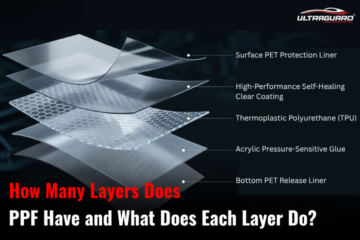
Modern PPF typically consists of multiple layers:
• Top Coat: Protects against stains and environmental contaminants.
• TPU Layer: Provides flexibility, impact resistance, and self-healing properties.
• Adhesive Layer: Allows secure installation without damaging factory paint.
• Release Liner: Removed during installation.
When a small scratch occurs, heat from sunlight or warm water can help the surface recover, reducing visible marks.
Why More Car Owners Are Choosing PPF
1. Protection Against Stone Chips: Highway driving often causes paint damage from loose gravel and debris.
2. Self-Healing Technology: Premium TPU films can recover from minor swirl marks and light scratches.
3. UV Protection: Prevents fading and oxidation caused by prolonged sun exposure.
4. Easier Maintenance: Hydrophobic surfaces repel water, dust, and contaminants.
5. Better Resale Value: Preserving factory paint can improve resale appeal.
Compare Top PPF Brands
The best PPF brands depend on budget, installation quality, warranty, and after-sales support.
| Brand | Self-Healing | Warranty | Popular For |
| Ultraguard | Yes | Varies by series | Indian market support, Durability |
| XPEL | Yes | Premium segment | High-end cars |
| LLumar | Yes | Premium protection | Long-term durability |
| SunTek | Yes | Gloss finish | Appearance enhancement |
| 3M | Yes | Strong dealer network | Trusted brand presence |
Ultraguard’s Paint Protection Film
Ultraguard offers multiple PPF options, including clear PPF series, matte PPF series, black PPF series, color PPF series, and texture PPF series. The company focuses heavily on self-healing, UV resistance, and customization options.
| Best For | Pros | Cons |
| • Premium cars and bikes • Daily-driven cars and bikes • Owners seeking multiple finish options |
• Multiple finish choices • Self-healing technology • UV resistance • Hydrophobic surface |
• Performance depends heavily on installer quality • Premium packages may increase the overall cost |
PPF vs Ceramic Coating
| Feature | PPF | Ceramic Coating |
| Stone Chip Protection | Excellent | Limited |
| Scratch Resistance | High | Moderate |
| UV Protection | Excellent | Good |
| Hydrophobic Effect | Excellent | Excellent |
| Cost | Higher | Lower |
| Paint Preservation | Best | Moderate |
Which One Should You Choose?
• Choose PPF if paint protection is your priority.
• Choose ceramic coating if gloss and easier cleaning are your main goals.
Many car owners combine both for maximum protection.
How Much Does PPF Cost in India?
Prices vary depending on:
• car size
• Film quality
• Coverage area
• Installer expertise
• Warranty package
PPF Car Coating Price 2026
| Coverage | Approximate Price Range |
| Partial Front | ₹20,000–₹50,000 |
| Front Package | ₹40,000–₹80,000 |
| Full Car PPF | ₹80,000–₹2,00,000+ |
How to Choose the Best Paint Protection Film
Before purchasing PPF, consider:
• Material Quality: Prefer high-quality TPU-based films.
• Warranty: Look for manufacturer-backed warranties.
• Self-Healing Capability: Premium films recover better from minor scratches.
• Installer Experience: Installation quality often matters as much as film quality.
• After-Sales Support: Choose brands with reliable support and replacement policies.
Common Mistakes to Avoid
• Choosing solely based on price
• Ignoring installer expertise
• Not checking warranty terms
• Selecting non-TPU films
• Delaying maintenance after installation
Conclusion
If your car is worth protecting for the next 5–7 years, investing in a premium TPU-based PPF installed by an experienced professional generally provides better long-term value than frequent paint correction or repainting.
The best choice is not simply the most expensive film—it is the combination of:
• High-quality TPU film
• Skilled installation
• Genuine warranty
• Strong after-sales support
FAQs – Best Paint Protection Film for Cars 2026
Q1. Which paint protection film is best for a car?
The best PPF depends on your budget, desired finish, warranty, and installer quality. Premium TPU-based films generally offer the best protection.
Q2. Is PPF worth it in India?
For premium cars and long-term ownership, many owners find PPF worthwhile because it helps reduce paint damage from Indian road conditions.
Q3. How long does PPF last?
A quality TPU-based PPF typically lasts around 5–7 years with proper maintenance.
Q4. Does PPF turn yellow?
Modern premium films are designed to resist yellowing, although quality and maintenance play an important role.
Q5. Is PPF better than ceramic coating?
For physical protection, PPF is generally superior. Ceramic coating mainly improves gloss and cleaning ease.


0 Comments