| Reviewed By | Ultraguard National Sales Manager (29 years' experience) |
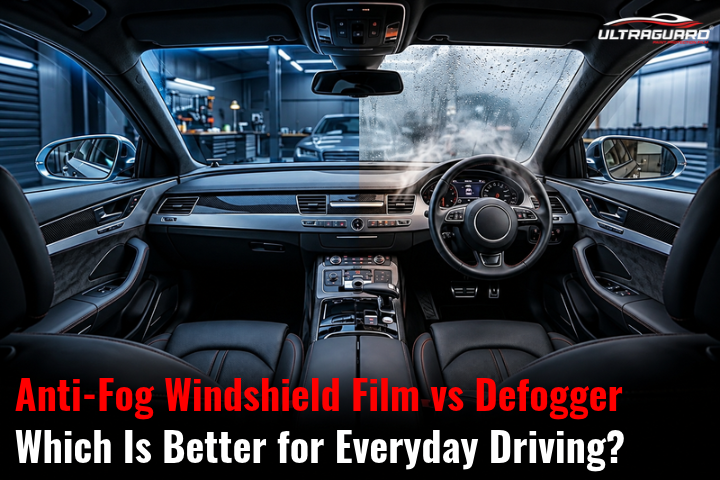
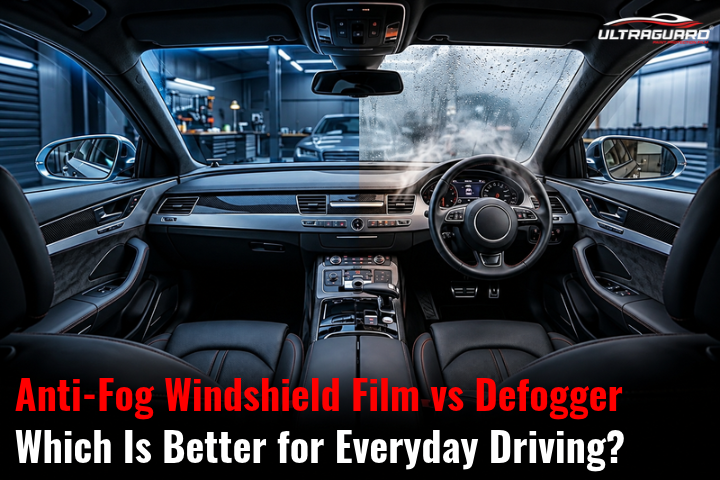
Anti-Fog Windshield Film vs Defogger are two different approaches that solve interior condensation and moisture buildup on your car's glass. A defogger clears fog fast and is already in your car. Anti fog for windshield helps stop fog from coming. It needs upkeep. For most drivers, use the defogger first and add anti-fog film as a backup if fog keeps coming back.
In 2022, India recorded 34,262 road accidents in misty or foggy weather and caused 14,583 deaths, as per the Ministry of Road Transport and Highways.
That’s fog outside the car. A fogged-up windscreen steals the same thing – your view of the road. Interior fog is common and risky. It comes in seconds - particularly in cold morning or rainy commute.
So what fixes it? A defogger, an anti-fog film or both? This guide is your straight answer. We discuss trade-offs and where windshield protection film should be your first choice.
What Is Anti-Fog Windshield Film?
Anti-fog film is a thin hydrophilic layer which is applied to the inside of the glass. This film is water-loving. The film does not let tiny droplets form a milky fog. The layer spreads moisture into an even and near-invisible film.
You’ll see Anti-Fog Windshield Protection Film in a few types:
| Type | How it’s Applied |
| Car Windshield Defogger spray | Wiped on the inside glass |
| Pre-fit tear-off film | Fitted to the inside of the windshield |
| Windshield protection film | Excellent for heavy outside fog |
| Factory coating | Added during glass production |
How Does a Car Defogger Work?
A defogger works in two ways on fog. It blows warm air on the glass and your AC dries that air quickly. Fog forms when warm, moist air come in contact with cold glass. On a cold morning, body heat and breath moisture are enough to push the cabin to the fogging point.
Expert Tip:
Ritesh Gosain, Regional Sales Manager at Ultraguard, gives a tip to car owners who fight this problem. The A/C is also a dehumidifier, so keep it on even while using warm air.
How to Prevent Windshield Fogging: Step by Step
Ritesh gives a process breakdown of how to clear fog from your windshield:
-
Switch on the front defog setting.
-
Turn A/C on (even with warm air).
-
Use fresh-air mode
-
Do not use recirculation.
-
Crack a window briefly.
-
Equalise inside and outside conditions. Open windows. It is the fastest way.
-
Use a clean microfibre cloth to wipe patches
And voila! Here is your anti fog solution for car windows.
How To Remove Fog Inside The Car During Rain Without A/C
Rain means damp clothes, wet floor mats and humid air. Without A/C, your best moves to remove fog are:
-
Fresh-air mode and a slightly open window.
-
Keep recirculation off.
-
Wipe the glass
-
Don’t leave wet umbrellas inside the cabin.
How To Remove Fog From The Outside Of The Windshield
Sometimes the fog is on the outside. It can happen when a cold, A/C-cooled windscreen meets warm, humid air.
-
Your wipers clear it in seconds.
-
Reducing the A/C blast at the glass helps too.
-
If it's a frequent problem, consider applying a anti fog solution for car.
How To Remove Fog From Baleno, Nexon And Other Cars
Our experts get these questions. Mornings and nights start getting colder around Diwali. Turn on the front defogger. Use the front windshield defogger to clear fog in less time.
-
Switch on AC: It will reduce moisture inside the cabin; preventing fog buildup.
-
Use fresh air mode: Turn off air recirculation. It brings in fresh air. Your car gets low interior humidity.
-
Temperature adjustment: Use warm air and direct it towards the windshield. It clears condensation ASAP.
-
Windshield cleaning: Dust, oil, and dirt should be removed.
-
Apply Anti-Fog Windshield Protection Film: An Anti-Fog Film for car windshields can reduce condensation. You get clearer visibility.
-
Car Windshield Defogger: Use your vehicle's built-in defogger regularly. Especially in winter and rainy weather.
Anti-Fog Windshield Film vs Defogger: What’s the Differences
How Anti-Fog Film for Car Windshield and Car Windshield Defogger differ:
| Factor | Anti-fog Film or Coating | Defogger |
| How it works | Spreads moisture into a thin, clear layer | Warms and dries the air hitting the glass |
| Speed | Works as fog tries to form | Time needed to warm and dry the glass |
| Engine off | Still works | Needs the blower and A/C running |
| Upkeep | Reapply or replace over time | Blower, A/C and ducts in order |
| Energy use | No extra load | Uses blower and A/C |
Benefits and Limitations of Both Windshield Fogging Solutions
Anti-Fog Windshield Film vs Defogger have their own cons:
Anti-Fog Film for Cars or Coating
Let’s look at the advantages and disadvantages:
| Benefits | Limitations |
| Prevents fog before it builds, even with the engine off | Most coatings offer temporary protection |
| No need for a blower or AC | Frequent wiping can reduce effectiveness |
| Stays crystal-clear | High humidity can reduce performance |
Windshield Defogger
What are the pros and cons:
| Benefits | Limitations |
| Already installed in the car, so no extra purchase is needed | May not work if the blower motor or defroster grids are damaged. |
| Clears fog in different weather conditions | Only working when the car is running. |
Anti-Fog Windshield Film vs Defogger: Which Is Better for Everyday Driving?
What suits you as per your conditions:
| Situation | Better Pick |
| Winter fog on cold mornings | Defogger with A/C first |
| Rainy-season commute | Defogger + fresh air |
| Short, frequent trips | Anti-fog film or coating helps |
| Car parked for long stretches | Anti-fog coating helps |
| Very humid city | Defogger first + film as a bonus |
The honest verdict: for everyday driving, the defogger wins on reliability and proof. Film wins on convenience when fog is a repeat problem.
Can Anti-Fog Film and a Defogger Be Used Together?
Yes. An anti-fogging windshield film and a defogger can do different jobs nad they both can be used together.
-
Windshield film or coating reduces how often fog forms.
-
The defogger clears whatever still gets through.
-
Keep the glass clean.
-
Dirt on the surface holds moisture and invites fog.
If you go for a windshield protection film, make sure you follow the manufacturer’s instructions for better performance.
How to Choose the Right Windshield Protection Solution
Instead of going after marketing claims, choose based on your driving conditions and needs:
Checklist for anti-fog film
-
Check VLT. On a windshield, India requires at least 70%.
-
Ask how long it lasts and how to care for it.
-
Tint and fog protection are different things. So compare smartly.
-
Warranty should always be in writing.
Checklist for a defogger
-
Confirm your A/C compressor and blower both work.
-
Check the rear defroster grid lines for damage.
-
If you’re considering an aftermarket 12V unit, check its power rating against your socket and make sure it doesn’t block your view.
Is sun or tint film allowed on a windshield in India?
Rule 100 of the Central Motor Vehicle Rules sets at least 70% VLT for front and rear windshields. 50% for side windows. It was amended with effect from 1 April 2021. Some city police still run drives against dark films. Clear windshield films with a stated VLT above 70% are the safe route.
How Windshield Protection Film for Car is Installed
Ultraguard has one of the largest networks of dealers and detailers with 5100+ across India. They follow this process of windshield film application:
-
Clean the inside of the glass to make it spotless.
-
Measure the film according to the windshield.
-
Smooth out bubbles and edges with a squeegee.
-
Let it dry or set.
-
No harsh cleaners afterwards
Why Explore Ultraguard Windshield Protection Solutions?
One clear point first. Ultraguard Windshield Protection Film protects the outside. It’s a liquid TPU windshield PPF designed to protect from stone chips, scratches and environmental damage.
| Specification | Ultraguard Windshield Protection Film |
| Material | Liquid TPU, 5-layer build |
| Thickness | 190 micron (7.5 mil) |
| Visible light transmission | 93% ±2 |
| Haze | Under 2% |
| UV Rejection | ≥ 99% |
| Temperature Resistance | -40°C to 120°C |
| Warranty | 12 months |
The five layers in Ultraguard windshield protection film:
-
protective top coat
-
self-healing layer
-
a liquid TPU substrate
-
pressure-sensitive adhesive
-
release liner
Why Ultraguard’s Windshield Film:
-
Clear and legal-friendly
-
Low haze: under 2%.
-
Easy upkeep and heat self-healing.
-
Works alongside the defogger or anti-fog coating
The Bottom Line
Fog is an inside problem. Chips and scratches are an outside problem. Fix each one with the right tool. Use your defogger first. Add anti-fog film if fog keeps returning. Protect the outside of the glass with a windshield protection film like Ultraguard. Always ask for a live demonstration of windshield protective film for legal VLT as it can land you in a fine.
FAQs - Anti-Fog Windshield Film and Defoggers
Q1. Does windshield protection film really work?
Yes. Windshield protection film really work with its advanced TPU technology. It is scratch-resistant and self-healing. It protects the glass in a collision by acting as a physical layer. The TPU core stops gravel and chips. The film does not let the impact focus on one scratching point and disperses the impact. Your front glass stays safe.
Q2. What is the best anti-fog film for a car windshield?
Ultraguard and UltrashieldX windshield protection film for your car can be worth considering. Compare VLT, durability, care and warranty. Choose 70% VLT on the windshield. Legal adherence is very important when it comes to your front glass.
Q3. How do I fog-proof a windshield?
Follow these steps to fog-proof your windshield: The glass should be clean. Run A/C and choose defog setting. Fresh air is best to remove fog. Consider an anti-fog film for repeat fogging. Consider Ultraguard windshield film for better visibility and impact protection.
Q4. How do I stop my front window fogging?
Manage the temperature and humidity inside your car to stop the window from fogging. Firstly, reduce cabin moisture. Dry wet items inside your car. Vent and wipe the glass clean. To prevent fogging in long-term, go for interior detailing and cleaning.
Q5. Does heat or A/C get rid of fog on a windshield?
Both help. But A/C works best because it dries the air. It works as a dehumidifier. Heat alone may not clear it if the air stays moist. For the fastest results, run your defroster with the heat cranked up. And turn A/C on at the same time.
Q6. Is RTO-approved sun film allowed on cars?
Yes. On windshields, film must keep VLT at 70% or higher. Side windows must stay at 50% or higher. Check local enforcement rules before choosing a windshield protection film. Non-compliance can cause fine and instant removal.
Q7. Can defoggers cause safety or maintenance issues?
Not by design. But a failing blower or damaged grid lines can leave you without a working defogger. Have them checked before the fog season. The wrong settings (turning on "air recirculation") can worsen fogging - instantly. Or they can completely block your vision.