While driving, even a single stone chip or any other substance can ruin your car’s perfect paint within seconds. To protect the car’s paint, owners are very concerned, and that’s why they are choosing car protection film. It looks like a single transparent film but is actually made up of multiple layers, where each layer plays an important role. From the self-healing top coat to the strong TPU and strong and secure adhesive layer, each of these layers helps to protect your car’s paint from everyday damage. Understanding these layers can help you choose the right PPF for your car, especially when you are choosing different PPF brands.
What is PPF and Why Does it have Multiple Layers?
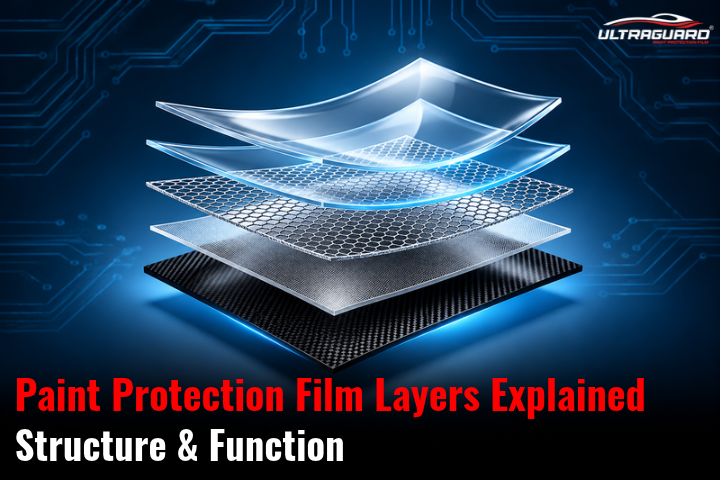
PPF, or paint protection film, is a transparent and clear sheet that is made up of thermoplastic polyurethane (TPU). This TPU is applied over the car’s painted surface, that help’s to protect the car’s original paint from stone chips, scratches, road debris, sunlight, bird droppings, and everyday damage. But we cannot claim that PPF is just a single sheet of plastic. A good quality film is made up of multiple layers, where each layer is designed with different functions. According to Ultraguard, PPF construction has five layers: surface PET protection liner, self-healing coating, TPU film, acrylic pressure adhesive, and bottom PET liner. But the most important thing to note is that there are two PET liners that are removed during the process of installation. The three main functional layers that are applied on the surface are the clear coat, TPU base film, and the adhesive layer.
PPF Layers Explained: What Does Each Layer Do?
To understand more about the five deep layers of PPF, here is the table below that will help you to understand the structure:
| PPF Layer | Main Function |
| Surface PET protection liner | Protects the film before the installation and during the process also |
| Heat-healing clear coat | Provides self-healing, surface protection, clarity, and the finish |
| TPU film | Gives flexibility, strength, and protection |
| Acrylic Pressure Sensitive Adhesive | Bonds with the film and gets attached to the car’s painted surface securely |
| Bottom PET Release Liner | Protects the adhesive before the installation |
Functional Layers of PPF
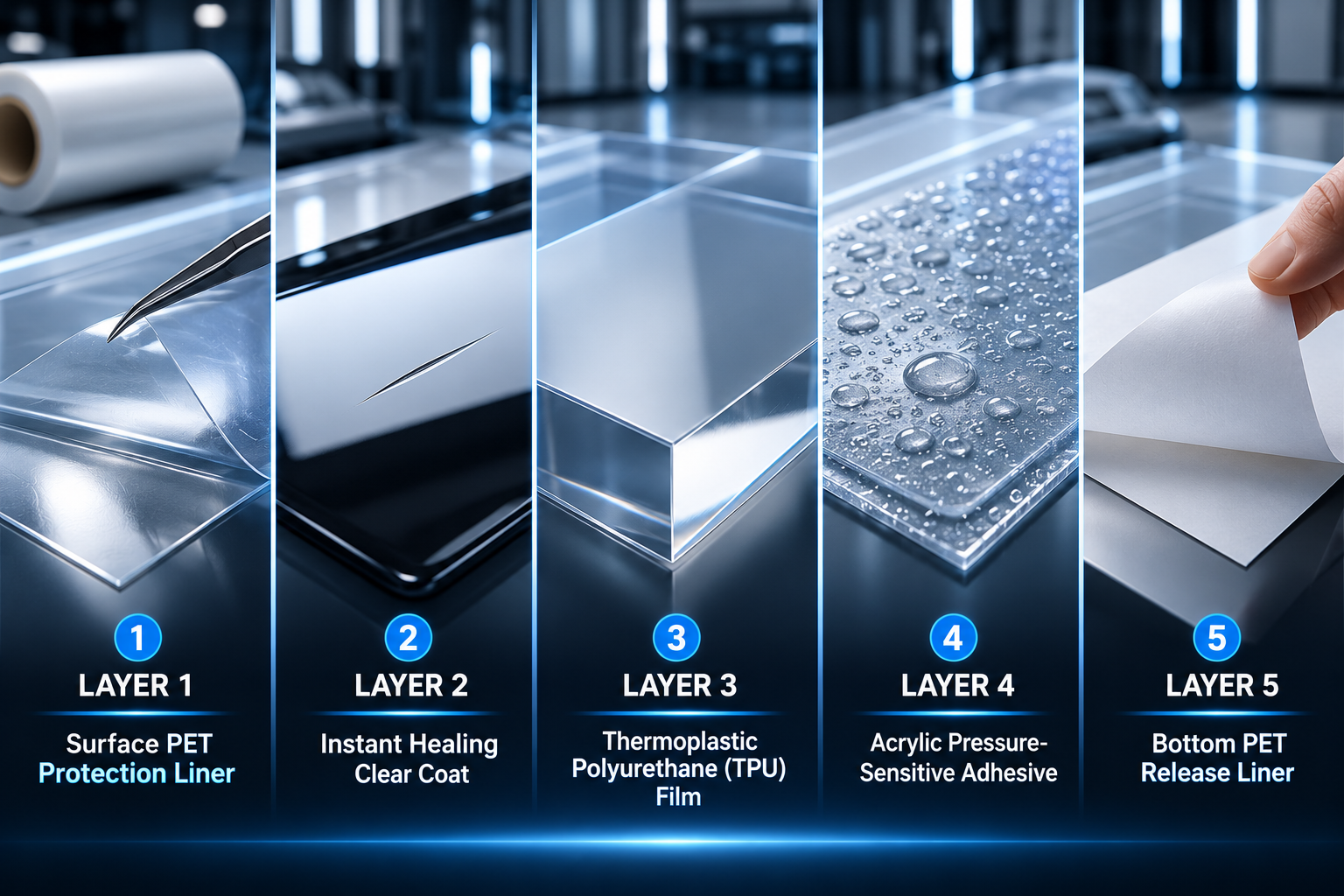
Layer 1: Surface PET Protection Liner
This is the first layer of the PPF film; its main job is to protect the film before it is installed on the vehicle. During transportation, storage, and preparation for installation, there is a high chance that the PPF can come into contact with dust particles and can have scratches in it. The protective layer on the top helps to keep the film clean and also protects it until the film is ready to be applied. Once the film is applied and installed properly, the upper liner is removed. Hence, it is not a permanent part of the film; it is just for protecting the film.
Layer 2: Instant Healing Clear Coat
The next layer in the PPF is the high-performance heat-healing clear coating. This is one of the most important layers when we talk about the appearance and the everyday performance of PPF. This clear coat is helpful in protecting the film’s surface from all the minor scratches and swirl marks. With heat, minor scratches and any other imperfections heal on their own. It also maintains the film's's gloss, clarity, and resistance to UV rays and stains on the film. This is why the self-healing technology is considered the main feature of the PPF film. Those who want their car to be protected should always check these factors.
Layer 3: Thermoplastic Polyurethane (TPU) Film
It provides the film with the flexibility and the strength to be installed on the curves of the vehicles. An important factor is that it acts as a primary impact-absorbing layer. Whenever your car faces some minor scratches or any kind of scratches, the TPU layer helps to absorb the impact of the scratch before it reaches the original paint of the car. Ultraguard uses one of the strongest and best TPUs called polycaprolactone aliphatic TPU. This strongest TPU comes from the strongest raw material; these raw materials come from the leading suppliers such as BASF, Lubrizol, and Wanhua. It helps the film for it’s flexibility, durability, and remaining clear over time without turning yellow. This is one of the main reasons why TPU is an important factor to consider when you are choosing the PPF brands in India.
Layer 4: Acrylic Pressure - Sensitive Adhesive
The acrylic pressure- sensitive adhesive; it helps the film to stay on the surface. A quality adhesive creates a strong and durable bond, which allows the film to be perfectly adhered to the surface without damaging the original paint of the car, and even if, in the future, you ever think of removing the PPF, a good quality PPF can be easily removed. Without the proper installation of the PPF, the film will not even work properly.
Layer 5: Bottom PET Release Liner
The liner sits very well under the adhesive and protects the film before installation. Without this layer, the adhesive could have stuck to any other unwanted substance. During the installation, the bottom liner is very carefully removed so that the adhesive can be applied to the car’s surface.
Which PPF Layer Provides the Most Protection?
It is hard to say that which layer plays an important role or protects the most, as the perfect PPF works best when all the layers are perfectly installed on your car.
- Clear Coat: Protects the surface and helps protect from minor scratches with the help of heat.
- TPU: Makes the film flexible, strong, and able to absorb all impacts
- Adhesive: Keeps the film attached to the surface
- PET Liners: Protect the film and the adhesive before installation Each layer plays an important role; that’s why you should always choose the overall quality of the film for better protection.
Do More PPF Layers Mean Better Protection?
No, when you are comparing PPF, this must have come to your mind that more layers mean a better product. But in reality, each layer plays an important role, and all of them act together to perform well; rather than just counting the layers, one should simply see the overall quality of the film. While selecting the PPF, you should also consider these:
- TPU material quality
- Self-healing technology
- Anti-yellowing quality
- Adhesive quality
- Film thickness
- Warranty
- Installation quality
- Brand reputation
Does PPF Protect the Entire Car?
Yes, but it also depends on where it is applied; you can also choose the particular or targeted area for the PPF, whether you want partial coverage for the most exposed area only, or the full PPF, or the full body installation. If you have a new car, then a full-body PPF on the car can be more protective; on the other hand, the partial coverage will focus more on the front bumper, bonnet, mirror cap, and the door edges. PPF is also available in variations such as clear, matte, black, coloured, textured, and in many other finishes that protect the car along with the look.
Conclusion
PPF is made up of 5 layers: PET liners, self-healing coat, TPU, and an adhesive layer. Each layer have it’s own role, and all of them work together to protect the surface of the car. The PET liners are removed from the film during the installation process, while the other 3 layers protect your car from external damage. When choosing PPF rather than choosing the price, you should always check the quality of the film. A high-quality film installed by a professional performs best and gives better durability, clarity, and long-term protection for your car.
FAQs - PPF Layers Explained
Q1. What are the different layers of Paint Protection Film (PPF)?
Paint Protection Film consists of multiple protective layers, including a PET surface protection liner, self-healing clear coat, TPU film, adhesive layer, and bottom PET release liner. Each layer serves a specific purpose in protecting and applying the film.
Q2. What is the purpose of each layer in a multi-layer PPF structure?
Each layer performs a different function, from surface protection and scratch resistance to flexibility and secure adhesion. Together, these multiple protective layers help maintain the film's performance and protect the vehicle's original paint.
Q3. How does the self-healing clear coat layer in PPF work?
The self-healing clear coat is designed to repair minor surface scratches and swirl marks when exposed to heat. This helps maintain the film's smooth, glossy appearance over time.
Q4. How does the TPU layer protect car paint from scratches, stone chips, and environmental damage?
The Thermoplastic Polyurethane (TPU) layer acts as the primary protective film, absorbing minor impacts from road debris and stone chips. Its flexibility and durability help shield the original paint from everyday damage.
Q5. How do the adhesive and release liner layers help in PPF installation?
The acrylic pressure-sensitive adhesive helps bond the PPF securely to the vehicle's painted surface. The bottom PET release liner protects the adhesive before installation and is peeled away during application.