Car detailing is much more than simply washing a car. It is a professional process that restores, protects, and enhances every part of a car, including the paint, wheels, glass, engine bay, and interior. If you own a detailing studio, you should investing in professional car detailing tools is the key to achieving high-quality results.
Professional detailers use specialized tools designed for different tasks such as exterior washing, paint correction, ceramic coating, car PPF installation, and interior cleaning. Every tool serves a unique purpose, helping reduce labor, improve efficiency, and deliver a showroom-quality finish.
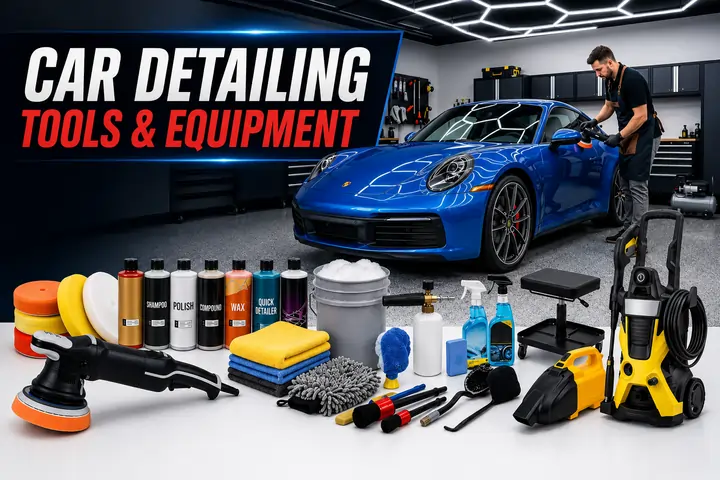
What is Professional Car Detailing Equipment?
Car detailing equipment refers to the machines, accessories, brushes, chemicals, and cleaning devices used to clean, restore, polish, and protect every surface of a car.
Unlike regular car washing tools, detailing equipment is designed to provide deeper cleaning, paint enhancement, and long-lasting protection.
Common categories include:
● Exterior Car Cleaning Products
● Car Interior Detailing Products
● Paint Correction Machines
● Ceramic Coating Kit
● PPF Installation Tools
● Car Steam Wash Machine
● Car Vacuum Cleaner
● Pressure Washers
● Polishing and Buffing Machines
● Microfiber Cloth
● Car Detailing Light Setup
Using the correct equipment improves efficiency, minimizes the risk of paint damage, and ensures professional-quality detailing results.
Why Quality Car Detailing Equipment Matters
Many beginners believe expensive chemicals alone produce outstanding results. In reality, professional detailers know that the right equipment makes the biggest difference.
Benefits of Professional Car Detailing Equipment
● Improved Cleaning Efficiency
● Faster Detailing Process
● Better Paint Care
● Professional-Quality Results
● Saves Time and Effort
● Effective Paint Correction
● Enhanced Polishing Results
● Better Interior Cleaning
● Improved PPF Preparation
● Increased Productivity
● Greater Equipment Durability
● Consistent Detailing Results
Investing in quality equipment also reduces maintenance costs and increases productivity.
Categories of Car Detailing Tools and Equipment
Professional detailing equipment can be divided into several categories.
1. Exterior Washing Equipment
Exterior washing is the first step of every detailing process. Essential washing equipment includes:
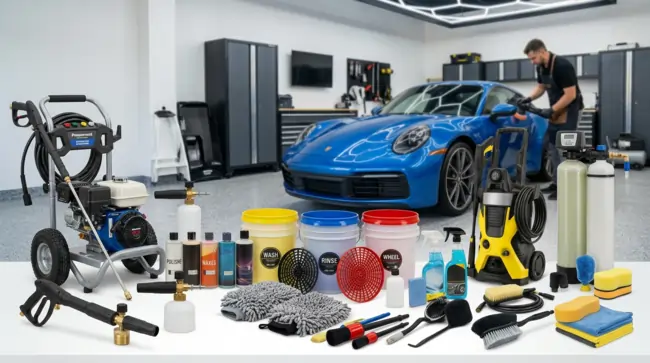
● Pressure washer
● Foam cannon
● Garden hose
● Spray nozzle
● Two wash buckets
● Grit guards
● Microfiber wash mitt
● Drying towel
● Air blower
● Water filtration system
These tools safely remove dirt while reducing the chances of scratching the paint.
2. Interior Detailing Equipment
Interior detailing requires different equipment because every material inside the car demands specialized care. Popular interior detailing tools include:
● Wet and Dry Vacuum Cleaner
● Steam Cleaner
● Upholstery Extractor
● Leather Cleaning Brush
● Interior Detailing Brushes
● Tornado Cleaning Gun
● Microfiber Cloths
● Glass Cleaning Towels
These tools help clean carpets, seats, dashboards, vents, leather surfaces, and hard-to-reach areas.
3. Paint Correction Equipment
Paint correction removes scratches, swirl marks, oxidation, and dullness from car paint.
Professional paint correction equipment includes:
● Dual Action (DA) Polisher
● Rotary Polisher
● Mini Polisher
● Foam cutting pads
● Wool pads
● Microfiber cutting pads
● Compound
● Polish
● Finishing polish
● Inspection lights
Paint correction restores gloss and prepares the car for wax, sealant, or ceramic coating.
Pressure Washer
A pressure washer is considered one of the most important Car Detailing Tools and Equipment because it removes heavy dirt without requiring aggressive scrubbing.
Advantages
● Saves time
● Uses less water
● Removes mud easily
● Reduces wash-induced scratches
● Improves foam cannon performance
Features to Look For
● Adjustable pressure
● Brass pump
● Long hose
● Reliable motor
● Compact design
● Durable connectors
Pressure washers are suitable for both home users and professional detailing businesses.
Foam Cannon
A foam cannon produces thick snow foam that loosens dirt before contact washing.
This significantly reduces the risk of swirl marks.
Benefits
● Softens dirt
● Improves lubrication
● Safer washing
● Better shampoo coverage
● Professional appearance
Foam cannons are commonly used before the two-bucket wash method.
Two-Bucket Wash System
Professional detailers rarely wash a car using a single bucket. Instead, they use the two-bucket method.
● Bucket One: Contains clean shampoo solution.
● Bucket Two: Contains clean rinse water.
This system prevents dirt from returning to the wash mitt.
Additional Accessories
● Grit Guards
● Bucket Dolly
● Measuring cups
● Bucket lid
Microfiber Wash Mitt
Traditional sponges trap dirt against the paint surface.
Microfiber wash mitts lift dirt away from the paint, reducing scratches.
Benefits
● Soft fibers
● Excellent water retention
● Reusable
● Paint-safe
● Easy cleaning
Professional detailers always recommend microfiber over ordinary sponges.
Drying Towels
Drying a car properly is just as important as washing it. Professional drying towels are made from premium microfiber materials.
Advantages
● High absorbency
● Streak-free drying
● Scratch-free finish
● Fast drying
● Reusable hundreds of times
Large twisted-loop microfiber towels have become an industry standard.
Air Blower
Many professional detailers prefer using an air blower after washing. It removes water trapped inside:
● Mirrors
● Door handles
● Grilles
● Badges
● Fuel cap
● Wheels
This prevents water spots after detailing.
Wheel Cleaning Tools
car wheels accumulate brake dust, road grime, grease, and iron particles. Specialized wheel cleaning equipment makes the process easier.
Essential wheel detailing tools
● Wheel brush
● Barrel brush
● Tire brush
● Lug nut brush
● Wheel woolies
● Wheel bucket
● Tire dressing applicator
Dedicated wheel tools prevent cross-contamination with paintwork.
Tire Cleaning Brushes
Tires require stiff-bristle brushes capable of removing embedded dirt and old tire dressing. Good tire brushes help:
● Restore rubber appearance
● Improve tire dressing durability
● Remove road grime
● Deep clean sidewalls
Detailing Brushes
Detailing brushes come in different sizes and materials. They clean delicate areas that larger tools cannot reach.
Common uses
● Air vents
● Logos
● Badges
● Window trims
● Dashboard buttons
● Steering wheel
● Gear selector
● Cup holders
Professional detailers often keep multiple brush sizes for different applications.
Vacuum Cleaners for Car Detailing
A vacuum cleaner is one of the most frequently used Car Detailing Tools and Equipment in any detailing studio. It removes dust, dirt, sand, pet hair, and debris from carpets, seats, floor mats, and hard-to-reach areas.
Key Benefits
● Removes loose dirt quickly
● Cleans carpets and upholstery effectively
● Reaches tight spaces
● Improves interior hygiene
● Saves time during detailing
Features to Look For
● Wet and dry functionality
● High suction power
● Long power cord or hose
● Multiple nozzle attachments
● Large dust collection capacity
● Durable construction
A wet and dry vacuum is a smart investment because it can handle both liquid spills and dry debris.
Steam Cleaners
Steam cleaning has become an essential part of modern car detailing. High-temperature steam helps sanitize surfaces while reducing the need for harsh chemicals.
Common Applications
● Dashboard cleaning
● Leather seats
● Fabric seats
● Door panels
● Air vents
● Steering wheel
● Cup holders
● Gear lever
● Floor mats
Benefits of Steam Cleaning
● Kills bacteria and germs
● Removes stubborn stains
● Eliminates odors
● Uses less water
● Safe for most interior surfaces
● Reaches difficult areas
Steam cleaners are especially useful for cars with heavily soiled interiors or persistent odors.
Upholstery Extractors
An upholstery extractor is designed for deep cleaning fabric seats, carpets, and floor mats.
Unlike a vacuum cleaner, an extractor sprays a cleaning solution into the fabric and immediately vacuums it back out along with dirt and contaminants.
Advantages
● Deep cleans upholstery
● Removes embedded dirt
● Eliminates stains
● Reduces drying time
● Restores fabric appearance
Professional detailing businesses often use extractors for premium interior detailing packages.
Air Compressors
Air compressors power several detailing tools and make cleaning faster and more efficient.
Common Uses
● Drying tight spaces
● Operating Tornador cleaning guns
● Cleaning engine bays
● Removing dust from vents
● Inflating tires
● Powering pneumatic tools
Features to Consider
● Tank capacity
● Air pressure (PSI)
● Airflow (CFM)
● Noise level
● Portability
Choosing the right air compressor depends on the size of your detailing operation.
Tornador Cleaning Gun
The Tornador Cleaning Gun is a favorite among professional detailers for quickly cleaning intricate interior areas.
It uses compressed air mixed with cleaning solution to loosen dirt from textured surfaces.
Ideal for Cleaning
● Air conditioning vents
● Door pockets
● Dashboard seams
● Seat rails
● Cup holders
● Carpets
● Floor mats
Benefits
● Faster cleaning
● Less manual scrubbing
● Deep cleaning action
● Saves labor
● Professional results
A Tornador gun significantly improves productivity in busy detailing shops.
Air Blow Gun
An air blow gun uses compressed air to remove dust and moisture from difficult-to-access areas.
Common Applications
● Side mirrors
● Door handles
● Badges
● Wheel nuts
● Air vents
● Engine compartments
Advantages
● Prevents water spots
● Speeds up drying
● Removes hidden dust
● Reduces towel usage
This simple tool is inexpensive but highly effective.
Paint Correction Equipment
Paint correction is one of the most valuable detailing services. It removes imperfections such as swirl marks, oxidation, light scratches, and water spots, restoring the car’s gloss.
Professional paint correction requires specialized Car Detailing Tools and Equipment and proper technique.
Dual Action (DA) Polisher
The Dual Action Polisher is widely recommended for beginners and professionals because it provides excellent results while minimizing the risk of damaging the paint.
Benefits
● User-friendly
● Safe for beginners
● Reduces swirl marks
● Produces consistent results
● Less heat buildup than rotary polishers
Common Uses
● Paint correction
● Wax application
● Sealant application
● Finishing polish
● Light scratch removal
DA polishers are the preferred choice for most detailing businesses.
Rotary Polisher
A rotary polisher is designed for heavy paint correction and is commonly used by experienced professionals.
Advantages
● Faster correction
● Removes deeper scratches
● Handles severe oxidation
● High cutting power
Considerations
● Requires experience
● Generates more heat
● Higher risk of paint damage if misused
Rotary polishers are ideal for advanced detailing work but require proper training.
Mini Polishers
Mini polishers are compact machines designed for polishing areas that larger machines cannot easily access.
Perfect for
● Pillars
● Side mirrors
● Bumpers
● Door handles
● Spoilers
● Wheels
● Headlights
These tools improve precision and ensure every part of the car receives proper attention.
Polishing Pads
Polishing pads attach to polishing machines and determine the level of paint correction.
Types of Pads
● Cutting pads
● Polishing pads
● Finishing pads
● Foam pads
● Wool pads
● Microfiber pads
Each pad is designed for a specific stage of the polishing process.
Foam Pads
Foam pads are commonly used for polishing and finishing.
Advantages
● Smooth operation
● Even polish distribution
● Multiple firmness levels
● Reusable
● Easy maintenance
Different foam densities provide different levels of cutting and finishing.
Wool Pads
Wool pads offer aggressive paint correction and are often paired with rotary polishers.
Best For
● Heavy oxidation
● Deep scratches
● Paint leveling
● Severe swirl marks
They remove defects quickly but require careful handling.
Microfiber Cutting Pads
Microfiber cutting pads combine strong cutting ability with better finishing performance.
Benefits
● Efficient defect removal
● Lower heat generation
● Excellent compound performance
● Durable construction
Many professional detailers use microfiber pads for modern clear coat systems.
Compounds
Compounds contain abrasive particles that level the paint surface and remove defects.
Common Uses
● Heavy swirl marks
● Scratches
● Oxidation
● Sanding marks
● Water spot etching
Choosing the correct compound depends on the condition of the paint.
Polishes
After compounding, polishing refines the paint surface and restores gloss.
Benefits
● Improves shine
● Removes haze
● Enhances depth of color
● Creates a smooth finish
● Prepares paint for protection
A quality polish is essential before applying wax, sealant, or ceramic coating.
Inspection Lights
Proper lighting is crucial for identifying paint defects that may not be visible under normal conditions.
Inspection Lights Help Detect
● Swirl marks
● Holograms
● Fine scratches
● Buffer trails
● Uneven polishing
● Missed spots
LED inspection lights have become standard equipment in professional detailing studios.
Paint Thickness Gauges
A paint thickness gauge measures the thickness of a car’s paint layers before polishing.
Why It’s Important
● Prevents over-polishing
● Protects clear coat
● Identifies repainted panels
● Improves polishing safety
● Supports professional decision-making
Using a paint thickness gauge helps avoid irreversible paint damage during correction.
Ceramic Coating Tools and Equipment
Ceramic coating is one of the most popular paint protection services offered by professional detailers. To achieve a durable and flawless finish, using the right Car Detailing Tools and Equipment is essential.
A successful ceramic coating application depends on proper surface preparation, precise application, and controlled curing conditions.
Essential Ceramic Coating Tools
● Ceramic coating applicator block
● Suede applicator cloths
● Microfiber buffing towels
● Panel wipe spray
● Isopropyl alcohol (IPA) solution
● Spray bottles
● LED inspection light
● Infrared (IR) curing lamp
● Nitrile gloves
● Paint thickness gauge
Each tool plays an important role in ensuring the coating bonds correctly with the car’s clear coat.
Ceramic Coating Applicator Block
The applicator block helps spread ceramic coating evenly across the paint surface.
Benefits
● Uniform coating application
● Better product control
● Reduced coating waste
● Smooth coverage
● Comfortable grip
Most professionals wrap a suede applicator cloth around the block before applying the coating.
Suede Applicator Cloths
Suede applicators are specifically designed for ceramic coating installation.
Advantages
● Lint-free material
● Even product distribution
● Scratch-free application
● Disposable for better hygiene
● Compatible with most ceramic coatings
Using fresh applicators for each car helps maintain coating quality.
Infrared (IR) Curing Lamp
An infrared curing lamp speeds up the curing process of ceramic coatings.
Benefits
● Faster curing
● Improved coating hardness
● Reduced curing time
● Better durability
● More consistent results
Professional detailing studios often use IR lamps to deliver cars to customers more quickly.
Paint Protection Film (PPF) Installation Tools
Paint Protection Film (PPF) is a transparent polyurethane film applied to painted surfaces to protect against stone chips, scratches, road debris, and environmental damage.
Installing PPF requires specialized Car Detailing Tools and Equipment that allow installers to position, trim, and secure the film accurately.
Essential PPF Installation Equipment
● PPF plotter/cutting machine
● Plotter software
● Slip solution bottle
● Tack solution bottle
● Installation squeegees
● Turbo squeegees
● Edge tools
● Heat gun
● Precision knife
● Knifeless cutting tape
● Spray bottles
● Microfiber towels
● IR thermometer
● Edge sealing roller
Professional PPF installation relies on precision, cleanliness, and the correct tools.
PPF Plotter and Cutting Machine
A PPF plotter cuts film according to digital templates, eliminating the need to cut directly on the car.
Advantages
● Accurate patterns
● Faster installation
● Reduced material waste
● Consistent results
● Improved customer confidence
Many professional detailing businesses use plotters to improve efficiency and reduce installation risks.
PPF Squeegees
Squeegees remove water and air trapped beneath the film during installation.
Common Types
● Soft squeegees
● Medium squeegees
● Hard squeegees
● Turbo squeegees
● Corner squeegees
Different squeegee hardness levels are used for different areas of the car.
Heat Gun
A heat gun helps installers stretch and conform PPF around curves, edges, mirrors, and bumpers.
Uses
● Film stretching
● Edge wrapping
● Adhesive activation
● Removing trapped moisture
● Film repositioning
Proper temperature control is essential to avoid damaging the film.
Knifeless Tape
Knifeless tape allows installers to cut Paint Protection Film without using a blade directly on the car.
Benefits
● Eliminates cutting risks
● Cleaner edges
● Faster trimming
● Professional finish
● Increased safety
This tool is widely used for custom PPF installations.
Glass Cleaning Tools
Clean glass improves visibility and enhances the overall appearance of a detailed car.
Professional glass cleaning requires dedicated tools that leave a streak-free finish.
Essential Glass Detailing Equipment
● Glass cleaner
● Waffle weave microfiber towels
● Glass polishing pads
● Glass scraper
● Water spot remover
● Extension handle for windshields
Using separate towels for glass prevents contamination from waxes and polishes.
Waffle Weave Microfiber Towels
These towels are designed specifically for cleaning automotive glass.
Benefits
● Lint-free finish
● Excellent absorbency
● Streak-free results
● Durable construction
● Reusable
Professional detailers often dedicate specific towels exclusively to glass cleaning.
Engine Bay Detailing Tools
A clean engine bay enhances the car’s appearance and simplifies maintenance inspections.
Engine detailing should always be performed carefully to avoid damaging electrical components.
Essential Engine Detailing Equipment
● Soft detailing brushes
● Degreaser
● All-purpose cleaner (APC)
● Air blower
● Microfiber towels
● Plastic dressing applicator
● Spray bottles
● Protective gloves
Using gentle pressure and avoiding excessive water helps protect sensitive engine components.
Professional Detailing Chemicals
Even the best Car Detailing Tools and Equipment need the right chemicals to deliver professional results.
Using purpose-specific products improves cleaning performance while protecting car surfaces.
Exterior Cleaning Chemicals
● pH-neutral car shampoo
● Snow foam
● Iron remover
● Tar remover
● Bug remover
● Water spot remover
● Wheel cleaner
● Tire cleaner
Each product is formulated to target specific contaminants without damaging paint.
Paint Correction Chemicals
These products restore paint clarity and prepare the surface for protection.
Common Products
● Heavy cutting compound
● Medium-cut polish
● Finishing polish
● Panel wipe
● Paint cleanser
Always choose products compatible with the car’s paint type and condition.
Interior Cleaning Chemicals
Different interior materials require specialized cleaning solutions.
Recommended Products
● Interior cleaner
● Leather cleaner
● Leather conditioner
● Fabric cleaner
● Carpet shampoo
● Plastic cleaner
● Dashboard protectant
● Odor eliminator
Using the correct product helps preserve the appearance and longevity of interior surfaces.
Tire and Trim Products
Exterior plastic trim and tires benefit from dedicated restoration products.
Common Products
● Tire dressing
● Trim restorer
● Rubber conditioner
● Plastic protectant
These products restore color while protecting surfaces from UV damage.
Microfiber Products
Microfiber accessories are among the most important Car Detailing Tools and Equipment because they minimize the risk of scratching delicate automotive surfaces.
Essential Microfiber Products
● Wash mitts
● Drying towels
● Buffing towels
● Glass towels
● Interior towels
● Polish removal towels
● Applicator pads
Using color-coded microfiber towels helps prevent cross-contamination between different detailing tasks.
Safety Equipment for Detailers
Professional detailing involves chemicals, electrical equipment, and polishing machines. Safety should always be a priority.
Essential Safety Equipment
● Nitrile gloves
● Safety glasses
● Respirator mask
● Ear protection
● Knee pads
● Non-slip safety shoes
● Protective apron
● First-aid kit
● Fire extinguisher
Wearing appropriate safety gear reduces the risk of injury and promotes a professional working environment.
Conclusion
Choosing the right Car Detailing Tools and Equipment is one of the most important steps toward achieving professional detailing results. From pressure washers and foam cannons to polishers, vacuum cleaners, steam cleaners, ceramic coating accessories, and Paint Protection Film (PPF) installation tools, every piece of equipment plays a specific role in improving the quality, efficiency, and safety of the detailing process.
Whether you’re a beginner building your first detailing kit or a professional upgrading your workshop, investing in high-quality Car Detailing Tools and Equipment helps deliver consistent results, protect car surfaces, and increase customer satisfaction.
Detailing Equipment for Professionals – FAQ’s
Q1. What are the essential Car Detailing Tools and Equipment?
The basic tools include a pressure washer, foam cannon, vacuum cleaner, microfiber towels, detailing brushes, and a Dual Action (DA) polisher for complete interior and exterior detailing.
Q2. Which polisher is best for beginners?
A Dual Action (DA) polisher is the best option because it is easy to use, safe on paint, and delivers professional-quality results.
Q3. Why are microfiber towels used in car detailing?
Microfiber towels safely lift dirt and absorb water without scratching the paint, making them ideal for cleaning and drying cars.
Q4. What tools are needed for ceramic coating and PPF installation?
Ceramic coating requires applicators, microfiber towels, and an IR lamp, while PPF installation needs squeegees, a heat gun, slip solution, and a PPF plotter.
Q5. How can I maintain my Car Detailing Tools and Equipment?
Clean your tools after every use, store them properly, and regularly inspect machines and accessories to ensure long-lasting performance and reliable results.


0 Comments