We can say that proper interior leather seats in your vehicle cabin do matter. Therefore, it is an investment in luxury, consolation, and splendor. However, this top-class leather material requires vigilance. Hard UV rays, everyday friction, and excessive temperatures can overall ruin their appearance.
Good news? Maintaining a smooth, expensive feel is completely achievable by following an actual routine. Here is your expert guide on how to protect your car’s leather seats and keep your interior showroom clean over the years.
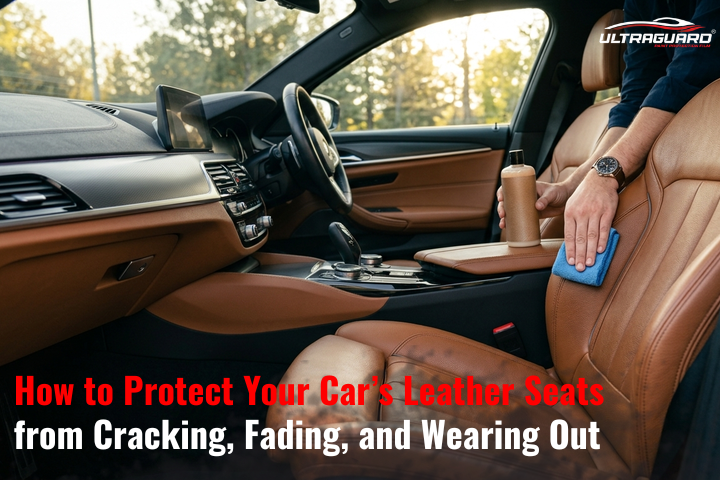
How to Protect Your Car’s Leather Seats
Below you will see a few pointers on how to protect your car’s leather seats and safeguard them.
1. Start with Proper Leather Care
The only safety isn’t always a single product application; it is continuity and daily habits. Your journey of how to protect your car’s leather seats should begin with simple, regular care.
● Routine vacuuming: Fine dirt particles and grit are the best enemies of leather seats. They work like sandpaper; every time you take a seat, they wear off under the surface. Use a tender brush attachment to your vacuum cleaner weekly to raise the dirt lightly from the seams and holes.
● Immediate cleansing: Treat spills of particularly dark fluids like coffee or oil as an emergency. Lightly blot, do not rub, the surface instantaneously with a clean, absorbent microfiber material. The longer the stain sits, the more hazardous it becomes.
2. Master Leather Seat Protection
Daily dusting is crucial; however, periodic, deep cleaning is indispensable for maintaining the integrity. If you are thinking of easy ways of how to protect your car’s leather seats and that too without loss, the key is to use the proper products and methods.
● Right cleaner: Always use a dedicated, pH-neutral leather seat cleaning product. Hard chemical compounds, regular household cleaners, or excessive cleaning compounds can strip natural oils and protective top coats, causing premature drying and cracks.
● Microfiber is your friend: Use the first cleaner on a tender microfiber fabric, not directly on the seat. Work in small, controlled sections, wiping them with a light hand to lift the collected grime and body oils.
● Rinse/wipe down: Always follow the cleansing procedure with the other damp (water-only) microfiber fabric to wipe any cleaner residue. The residue pulls the dirt and rejects your hard work.
3. Conditioning & Sun Protection
Cleaning gets rid of dirt; however, conditioning replaces moisture and vital oils. This step is the backbone of effective leather seat care.
Conditioning is vital for leather-based skin and requires nutrients. A high-quality conditioner restores leather’s flexibility and prevents it from hardening, drying, and cracking. Apply conditioner three times a 12 months, or more often when the car often comes into contact with extreme heat or sunlight.
Guard against UV rays: Ultraviolet (UV) rays are the main cause of the speedy disappearance of leather. Where and every time viable, park in the shade. For most, on how to protect your car’s leather seats, do not forget to install a UV-blocking window film, or park in a shady vicinity for the long term.
This simple function reduces internal heat and UV exposure significantly, which compromises the leather surface.
4. Professional Leather Care
When you have mastered the maintenance routine, the last way to answer this question of how to protect the car seats is through professional, long-term coatings.
When discussing advanced, sustainable security for a vehicle, most drivers immediately think of PPF coating for external paint. This modernised technology creates an invisible, self-healing barrier to road residues, stone chips, and UV damage.
While the PPF coating is an external solution, the philosophy of investing in a better protective layer as a shield against elements is equally important for your interior. Professional leather sealants (usually ceramic-based) provide a durable, hydrophobic (water-repellent) barrier:
● Stains block: Spread beads up so you can dry them without staining them.
● Prevents dye transfer: It is important for light -colored leather seats and prevents color transfer from jeans or other clothes.
● Better UV resistance: A professional coating provides a strong shield against fading compared to a traditional conditioner alone.
Conclusion
To know how to protect your car’s leather seats and make the interior show the luxury that it deserves, safeguarding it. By following the non-negotiable cleaning routine and making an investment in expert security measures, you can make sure that your automobile’s leather seat maintenance does not affect its resale price and aesthetic appearance over the following few years. For unparalleled professional car care, Ultraguard India incorporates advanced interior safeguarding solutions and India’s leading exterior protection technology, such as paint protection film, window film, and many other products.
FAQ’s – How to Protect the Car’s Leather Seat
Q1: How typically should I clean and condition my car’s leather seat?
We recommend cleansing every 1-3 months and using leather conditioner every three to six months. If your car is immediately exposed to the sun or is regularly exposed to excessive warmth, you need to have more frequent maintenance.
Q2: Can I use household cleaners on my leather seats?
No, harsh chemicals, normal household cleaners, or excessive soap can strip off the essential oils, and protecting the top coat assists in preventing premature cracks and their fading. Always use an automobile-specific pH-neutral leather-based cleanser.
Q3: How to protect your car’s leather seats and prevent them from cracking?
Cracks specifically happen due to dehydration and UV damage. The ultimate prevention methods are:
1) Regular conditioning, which aids in keeping the leather soft.
2) Utilizing sun shades for safeguarding the seats from the sun. You can also choose advanced technology, like Ultraguard window film.
Q4: Should I worry about using friction by way of slipping inside and out?
Yes, friction is a critical concern to wear on the side bolsters. Remember the way to get into the vehicle and get out. For the very last defense against this kind of friction, keep in mind a professional protective coating.
Q5: What is the biggest threat to my car’s leather?
Three main enemies are:
● UV exposure – Which fades and dries out the leather seats
● Friction – Which leads to tear and bolster wear
● Stains/dye transfer – Specifically happens on the light colored seats
Q6: Why is it said to condition the car’s leather from time to time?
Most modern motor vehicles have a clear, protective top coat on leather. Some detailers claim that the traditional conditioner just sits on top of this coat, making it slick and pulling dirt, instead of penetrating and moistening the leather. For coated leather, cleaning and dedicated leather coating/sealant for long-term protection against wear and stains are often recommended.





0 Comments